


















Growth trajectory of Islamic finance projected to reach $9.7 trillion by 2029
H.E. Yousef Khalawi discusses global Islamic finance growth, inclusivity in non-Muslim markets, innovative fintech solutions, and the transformative impact of ethical finance in driving sustainable and inclusive economies.
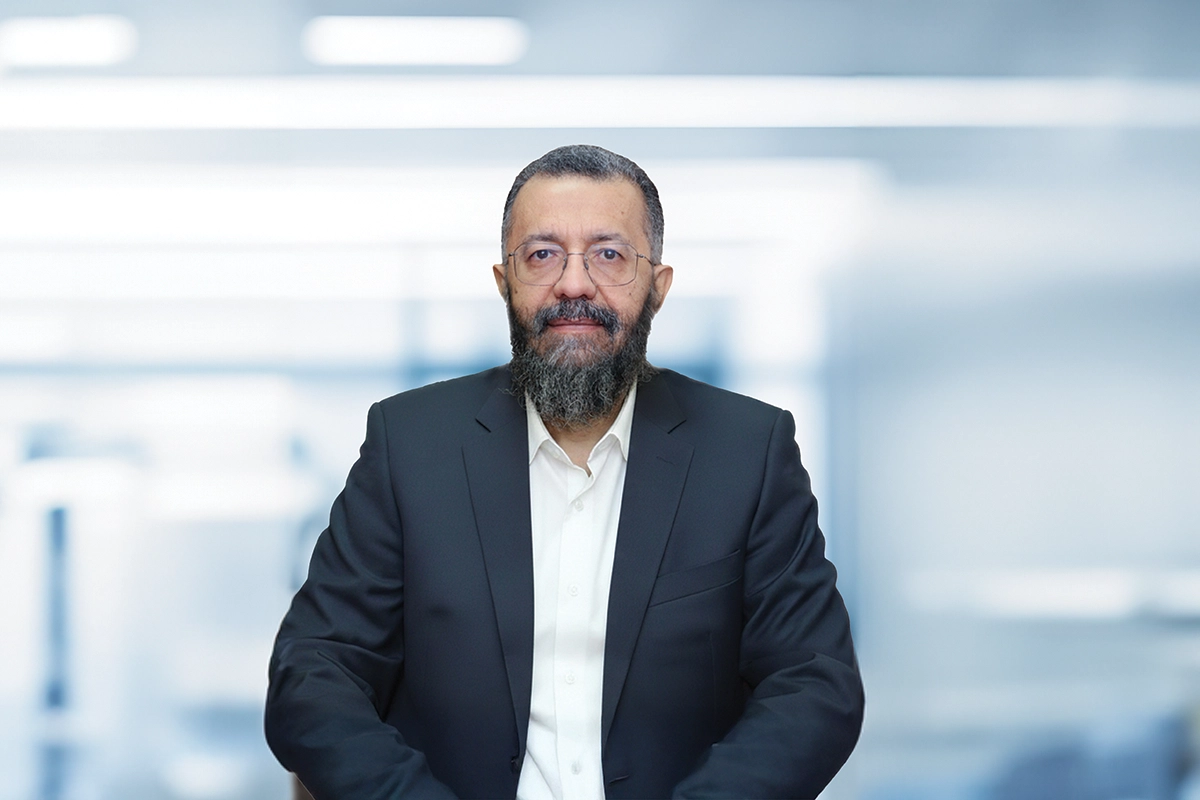
A towering figure in the realm of Islamic finance and global economy, H.E. Mr. Yousef Khalawi exemplifies visionary leadership and unwavering commitment to ethical economic frameworks. His profound expertise in comparative fiqh, coupled with his pioneering role within multinational corporations and esteemed organisations, has positioned him as a cornerstone in the global Islamic financial ecosystem. Through an illustrious career that spans multiple continents, Mr. Khalawi has consistently championed values of transparency, sustainability, and inclusivity, setting benchmarks for ethical governance in an often complex global financial landscape.
As the Secretary General of the AlBaraka Forum for Islamic Economy and the Islamic Chamber of Commerce, Industry and Agriculture, his initiatives have showcased the transformative power of Islamic finance not only for Muslim-majority nations but also for non-Muslim markets, earning momentum in regions from the United Kingdom to Australia. His acumen in fostering cross-border collaborations, incubating fintech innovation, and shaping international policy frameworks has further solidified his standing as a catalyst for meaningful change in both financial systems and communities worldwide.
What sets Mr. Khalawi apart is his ability to bridge tradition with modernity. With a profound understanding of Islamic jurisprudence and an unyielding drive for innovation, he has inspired countless initiatives that seamlessly integrate faith-based principles with cutting-edge technology. From supporting emerging scholars and developing innovative Sharia-compliant solutions to advancing ESG-aligned financial models and ethical investment infrastructures, his work is a testament to the adaptability and universality of Islamic finance. This interview delves into the profound insights and bold strategies that elevate Mr. Khalawi’s unmatched contributions to the thriving global Islamic economy.
A trailblazer in global Islamic finance, Yousef Khalawi’s leadership is reshaping ethical economic systems by bridging tradition, innovation, and inclusivity across global markets.
What are the key factors driving the growth of the global Islamic finance industry, which is expected to reach $9.7 trillion by 2029?
Several structural and global economic forces are pushing Islamic finance toward its projected USD 9.7 trillion size by 2029. The strongest driver is the rising global demand for ethical, transparent, and sustainability-aligned financial models. Because Islamic finance is built on risk-sharing, asset-backing, and the avoidance of interest, it naturally aligns with modern ESG standards, making it appealing to both Muslim and non-Muslim markets.
The broader Islamic economy, including sectors such as halal food valued at USD 1.43 trillion and halal tourism valued at USD 326 billion, continues to expand. This growth increases the need for Sharia-compliant financial services. Governments in the United Kingdom, Luxembourg, Thailand, and South Africa are supporting this expansion by strengthening regulatory frameworks for sukuk, Islamic banking windows, and takaful.
Global Islamic finance projected to reach $9.7 trillion by 2029
Islamic fintech is also accelerating industry growth. With global digital transactions expected to reach USD 306 billion by 2027, new technologies are making Sharia-compliant financial services more accessible. International collaborations, including AlBaraka Summits and cross-border sukuk listings, are further enhancing the global visibility and scalability of the industry.
How can non-Muslim markets, such as the UK, effectively integrate Islamic finance principles while maintaining competitiveness?
The United Kingdom has created a successful model for integrating Islamic finance into a mature financial system. Its approach focuses on regulatory clarity, tax neutrality, and inclusive financial infrastructure. Since the 1980s, the UK has ensured equal tax treatment for Islamic financial transactions such as Murabaha and sukuk, removing obstacles that could hinder competitiveness.
“Islamic finance is not exclusive to Muslims; it is a values-based system focused on ethics, transparency, and fairness.”
The Bank of England’s Alternative Liquidity Facility provides Islamic banks with a Sharia-compliant tool to manage liquidity, which is critical for their operations. To replicate this success, non-Muslim markets need clear regulations, access to Sharia-compliant liquidity tools, and continuous innovation in Islamic fintech, digital onboarding, and Sharia-compliant investment platforms. This approach enables Islamic finance to complement conventional finance rather than compete with it.
With Islamic finance gaining traction globally, especially in non-Muslim countries, what is the biggest opportunity for its expansion?
The biggest opportunity lies in ethical and sustainable investing. Islamic finance naturally aligns with ESG objectives, and ESG sukuk have already surpassed USD 50 billion in issuances. These instruments offer new funding channels for renewable energy, infrastructure, and social impact projects.
“Digital technologies are key to expanding financial inclusion for underserved communities and younger generations globally.”
Non-Muslim markets are showing growing interest in Sharia-compliant mortgages, ethical investment funds, and halal-aligned pension products. Countries such as Australia, Canada, the United States, and Brazil are developing or exploring Islamic financial solutions that meet increasing demand.
Islamic fintech is also a major opportunity, driven by digital banks, robo-advisors, zakat platforms, and halal marketplaces that expand financial inclusion for underserved communities and younger generations.
What are the most significant barriers to the adoption of Islamic finance in non-Muslim markets, and how can these challenges be overcome?
The main barriers include limited regulatory familiarity with Islamic financial structures, misconceptions that Islamic finance is only for Muslims, shortages of qualified Sharia and technical professionals, and strong competition from conventional financial institutions combined with limited public awareness.
“International collaborations strengthen Islamic finance by harmonising standards and expanding global investor networks.”
These challenges can be addressed through regulatory harmonization similar to the UK model, tax neutrality, and the creation of Sharia-compliant liquidity tools. Public education campaigns are important for demonstrating that Islamic finance is ethical, stable, and relevant for all communities. Capacity-building for regulators, banking professionals, legal experts, and fintech developers is also essential. Countries such as Thailand, the Philippines, Kenya, Ethiopia, and Suriname have already shown that Islamic finance can be successfully implemented even in markets with limited initial expertise.
You have emphasised education as critical to the growth of Islamic finance; what steps need to be taken to improve public understanding and literacy in this field?
Improving public understanding of Islamic finance begins with strengthening academic and research opportunities. The AlBaraka Forum for Islamic Economy has supported this goal by offering 36 grants and research opportunities for young scholars. These include grants for participants in the Durham Islamic Finance Summer School, research placements for emerging scholars at AlBaraka programs, and opportunities for 24 PhD students from 13 universities in the United Kingdom, Türkiye, and Qatar to present their research under the auspices of Saleh Kamel Islamic Economics Awards at the AlBaraka Summits in London and at the Global Islamic Economy Summit in Istanbul.
These initiatives enrich academic content that supports curriculum development, professional training, and wider public education. Media and digital learning platforms can also simplify Islamic finance concepts for general audiences. Beyond formal education, Islamic social finance including zakat and waqf plays a key role in demonstrating Islamic economic values within communities.
What role do governments and policymakers play in fostering the growth of the Islamic economy, and how do you evaluate current policy frameworks in the UK and Western markets?
Governments play a crucial role by shaping legislation, taxation policies, licensing frameworks, and long-term investment strategies. The United Kingdom is a leading example, having recognized Islamic banks as equivalent to conventional ones, issued sovereign sukuk in 2014 and 2021, introduced the Alternative Liquidity Facility, and supported Islamic banking windows and fintech ecosystems.
Other Western markets including Luxembourg, France, and Germany are progressing but still have room to grow in terms of regulatory depth. When governments actively support Islamic finance, investment flows increase and consumer confidence grows, contributing to a more inclusive financial system.
How do international collaborations, such as those showcased at the AlBaraka Summit, contribute to the resilience and scalability of Islamic financial models?
International collaborations strengthen Islamic finance by enabling knowledge exchange, harmonizing standards, and expanding global investor networks. The fourth AlBaraka Summit gathers regulators, scholars, investors, fintech entrepreneurs, and policymakers from more than 30 countries.
These collaborations support cross-border sukuk issuances, encourage fintech partnerships, and promote shared Sharia governance frameworks. They also diversify funding sources and allow for co-financing of large infrastructure projects. Emerging markets including Suriname, the Philippines, and Kenya gain valuable access to expertise through established hubs such as London, Kuala Lumpur, and Saudi Arabia.
How can Islamic finance models dispel misconceptions of exclusivity and demonstrate inclusivity for non-Muslim participants while maintaining Sharia compliance?
Islamic finance must communicate clearly that it is a values-based system focused on ethical governance, transparency, fairness, and real economic activity. These principles are relevant to all people, regardless of faith. Today, several non-Muslim governments including the United Kingdom, Luxembourg, and Hong Kong are among the most active issuers of sukuk.
Inclusivity can be demonstrated by presenting Islamic finance as an ethical financial alternative, showcasing global success stories, ensuring strong Sharia governance through independent oversight, and offering accessible digital platforms that allow all customers to engage with Islamic financial products.
What innovative approaches in technology and digitisation are being employed to attract younger generations and entrepreneurs to Islamic financial products?
Islamic fintech is reshaping the industry and attracting new audiences. The United Kingdom alone hosts 56 Islamic fintech firms spanning digital banking, robo-advisory services, crowdfunding, personal finance solutions, and digital assets.
Examples of innovation include digital Islamic banks such as Nomo, Rizq, Niyah, and MyAhmed, robo-advisors that provide automated Sharia-compliant portfolios, ethical micro-investment platforms such as Wahed, AI-powered tools for halal verification and zakat or waqf automation, and takaful technology solutions offering ethical insurance coverage. These innovations resonate strongly with Gen Z and millennial entrepreneurs who value transparency, digital accessibility, and ethical finance.
What do you envision as the long-term impact of Islamic finance on global economies, especially regarding ethical, inclusive, and sustainable systems?
Islamic finance is well-positioned to become a foundational pillar of ethical global capitalism. Its asset-backed structures naturally support investment in real economic sectors such as housing, infrastructure, renewable energy, agriculture, and small and medium enterprises. Green and ESG sukuk are increasingly used to finance solar energy projects, wind farms, clean water initiatives, and socially responsible development programs.
Islamic finance also promotes financial inclusion through profit and loss sharing, interest-free financing, microfinance tools, and digital zakat and waqf solutions that empower underserved communities. Ultimately, the Islamic economy contributes to a global financial landscape that is more balanced, fair, transparent, community-oriented, and sustainable.

EDITOR’S NOTE
Introducing Our Podcast Feature: A Conversation with H.E. Yousef Khalawi on the Future of Islamic Finance
We are thrilled to announce an exciting new addition to our interview page—a dynamic audio podcast of the insightful dialogue with H.E. Mr. Yousef Khalawi.
This engaging digital feature invites listeners to dive deeper into the visionary perspectives of one of Islamic finance’s most groundbreaking thought leaders. The podcast explores crucial themes, including the global trajectory of Islamic finance toward its projected $9.7 trillion market size by 2029, the impact of ethical finance in fostering sustainability and inclusivity, and the transformative role of fintech innovation in broadening financial accessibility.
Experience the powerful voice of H.E. Yousef Khalawi and join the conversation on redefining global financial systems for a sustainable tomorrow.