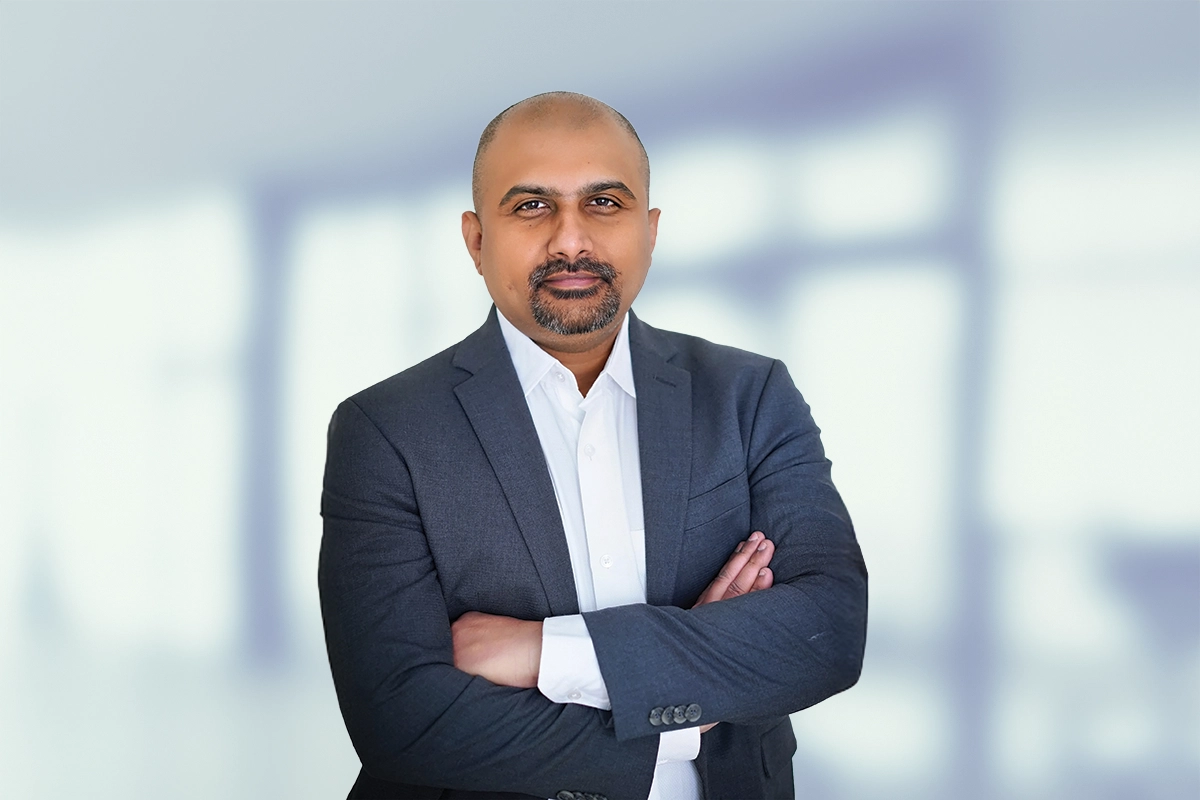
























Photo: Vladimer Botsvadze, a world-renowned AI and digital transformation expert, shares groundbreaking insights in his exclusive Entrepreneur Prime Magazine interview.
Exploring the AI Revolution and Transforming the Future of Work
Vladimer Botsvadze discusses the future of AI, digital transformation, leadership, and ethics, shedding light on how businesses can adapt, innovate, and thrive in a rapidly evolving digital landscape.
I n an era defined by rapid technological advancements and transformative innovation, few voices have risen to the global forefront as profoundly as Vladimer Botsvadze’s. With unwavering dedication, unparalleled expertise, and visionary foresight, Vladimer has consistently reshaped the way businesses, organisations, and thought leaders worldwide perceive and embrace the future of digital transformation and AI. His influence transcends borders, industries, and traditional boundaries, making him one of the most celebrated and trusted figures in the world of marketing, AI, and digital strategy.
What sets Vladimer apart is not only his remarkable accolades, including being named the №1 Global Marketing Thought Leader and a Top 20 Global AI Thought Leader, but also his ability to navigate the complexities of an ever-evolving technological landscape with a human-centric approach. His contributions as an advisor, mentor, and public speaker have empowered countless leaders and businesses to adapt, innovate, and thrive in this competitive digital age. From mentoring through esteemed platforms like Techstars to shaping narratives at renowned institutions, Vladimer serves as a beacon of inspiration and innovation.
Highlights From the Interview:
- Generative AI and agentic AI will revolutionise industries and workflows.
- Financial services, media, and manufacturing will experience the greatest disruption.
- Human strengths like creativity and critical thinking will remain essential alongside AI.
- Ethical AI adoption and responsible design are vital for trust and progress.
- Leadership qualities like adaptability and self-awareness are key in the AI-driven future.
- Organisations must foster AI literacy and embrace workforce transformation.
In this exclusive interview with Entrepreneur Prime, Vladimer delves into the trends, opportunities, and challenges shaping the next decade of AI and digital transformation. His thought-provoking insights provide not only a blueprint for navigating the future but also a call to action for organisations to embrace agility, ethics, and human creativity as we move into a new era of technological possibilities. Vladimer’s vision is clear: a future where AI and digital transformation enhance humanity’s strengths, enabling a more interconnected, inclusive, and intelligent world.
What are the most significant trends in AI and digital transformation that you expect to define the next decade, and how can businesses adapt to stay competitive?
The next decade of digital transformation will be defined by generative AI and agentic AI — technologies that don’t just automate tasks, but create, reason, and act autonomously. Generative AI is reshaping how content, code, and ideas are produced, while agentic AI introduces systems that can plan, decide, and execute end-to-end workflows with minimal human intervention. Together, they mark a shift from tools to intelligent collaborators. To stay competitive, businesses must move beyond experimentation and fully embrace this revolution — rethinking operating models, investing in AI literacy, modernizing data foundations, and embedding AI ethically and strategically into every core function.
“AI will quietly embed itself into everyday life, becoming
an invisible infrastructure shaping daily decisions.”
– Vladimer Botsvadze
As someone involved in global digital transformation, how do you foresee AI reshaping entire industries, and which industries do you think will experience the most disruption?
AI will reshape entire industries by shifting value from manual execution to intelligence-driven decision-making and automation at scale. As AI systems become more autonomous, organizations will redesign their workflows, business models, and even roles around human–AI collaboration. Industries with complex processes and high data intensity will see the most disruption. Financial services will transform through intelligent risk, compliance, and personalized banking. Manufacturing and supply chains will become more intelligently adaptive. Media, marketing, and software will be reinvented by generative and agentic AI, redefining speed, creativity, and productivity across the global economy.
“Preparing future generations means empowering
individuals to stand out, not blend in.”
– Vladimer Botsvadze
Generative AI is gaining enormous traction globally. What do you think are the major opportunities and challenges businesses and individuals face with its adoption?
Generative AI presents enormous opportunities by radically boosting creativity, productivity, and speed across every function — from content creation and software development to research and customer engagement. It democratizes innovation, enabling individuals and small teams to achieve enterprise-scale impact. However, adoption also brings significant challenges. Businesses must address data quality and ethical use. For individuals, the challenge lies in continuous upskilling and redefining value in an AI-augmented workplace. Success will depend on pairing generative AI’s power with strong governance, human judgment, and a clear strategic purpose.
With AI becoming more integrated into businesses, how can organizations prepare their workforce for a future where both AI and automation coexist with human teams?
As AI and automation become embedded in everyday work, organizations must shift from job replacement narratives to workforce evolution strategies. Preparing teams means investing in continuous learning, AI literacy, and reskilling programs that empower employees to work alongside intelligent systems. Human strengths — creativity, critical thinking, empathy, and ethical judgment — will become even more valuable. Leaders should redesign roles around human-AI collaboration, encourage experimentation, and build a culture that embraces change. Transparent communication about AI’s role is essential to build trust. Organizations that proactively upskill their people will unlock productivity while retaining talent and resilience in an AI-driven future.
Do you see AI as a net job creator or a disruptor of the workforce, and how should educational systems and businesses evolve to prepare future generations?
I see AI primarily as a disruptor of the workforce. We’re already witnessing marketing, copywriting, blogging, and even coding roles being partially or fully replaced by AI-driven tools. Rather than competing with machines on efficiency alone, people will need to differentiate themselves through creativity, authenticity, and leadership. Educational systems should evolve by teaching personal branding, strategic thinking, and adaptability, not just technical skills. For businesses and founders, building strong personal brands will become essential, as trust, vision, and human connection are difficult to automate. Preparing future generations means empowering individuals to stand out, not blend in.
In your view, how will AI and digital transformation change the way we live our daily lives in areas like education, transportation, and entertainment over the next 5–10 years?
Over the next 5–10 years, AI will quietly embed itself into everyday life, shifting from tools we use to systems that anticipate our needs. Education will become more personalized, with adaptive learning paths replacing one-size-fits-all classrooms. Transportation will grow safer and more efficient as autonomous and AI-assisted systems reduce human error. Entertainment will turn interactive and hyper-personalized, blending creators and audiences. The biggest change won’t be visibility, but dependency — AI will become an invisible infrastructure shaping daily decisions.
What advice would you give to C-suite executives struggling to adopt digital transformation strategies in their organizations? Where should they start?
C-suite executives should stop viewing digital transformation as a one-time overhaul and start treating it as a continuous learning process. The best place to start is small: pilot a single use case, test assumptions, and measure impact before scaling. Patience is critical, as meaningful change takes time and iteration. Leaders must also create a culture that embraces experimentation, where curiosity is encouraged. Digital transformation succeeds when executives lead by example — asking questions, staying hands-on, and remaining open to new ways of working as technology and markets evolve.
What qualities do you believe leaders need today to successfully navigate a future where digital transformation and AI continue to accelerate?
In a world where AI and digital transformation are accelerating faster than strategy cycles, leadership has become deeply human. Today’s leaders need strong self-awareness to understand their impact, clarity to truly believe in what they are building, and agility to pivot as conditions change. Lifelong learning is no longer optional — it’s a survival skill. Just as critical are resilience and adaptability, enabling leaders to navigate uncertainty without losing momentum. Technology may drive change, but it’s these human qualities that determine whether organizations merely react or confidently shape the future ahead.
Digital transformation often comes with resistance to change. What are the biggest cultural or operational roadblocks organizations face in implementing transformation at scale, and how can they overcome these?
The biggest roadblocks to digital transformation aren’t technological — they’re cultural. Comfort with the status quo, uncertainty about new ways of working, and entrenched habits often slow progress more than outdated systems. Operationally, rigid hierarchies and siloed teams prevent experimentation from scaling. To overcome this, organizations must reframe change as growth, not disruption. Leaders should reward learning and progress, not just outcomes, and give teams permission to test, iterate, and improve. Clear communication, shared ownership, and visible leadership support are essential. When transformation becomes part of the culture rather than a top-down mandate, resistance turns into momentum.
The global adoption of AI has led to controversies, including concerns over job displacement, deepfakes, and misinformation. How do you believe organizations and governments should take action to address these issues responsibly?
As AI reshapes society, responsibility must be proactive, not reactive. Organizations should embed ethics into design, ensuring transparency, accountability, and explainability in every system they deploy. Governments need clear, adaptable regulations that balance innovation with public safety, while investing in reskilling programs to address job displacement. Collaboration is key: industry, academia, and civil society should co-create standards to detect and mitigate deepfakes and misinformation. Education campaigns can empower citizens to navigate AI-driven content critically. By combining ethical design, smart policy, and public awareness, we can harness AI’s potential while safeguarding trust, equity, and the integrity of information.
As someone with hands-on experience and global insights, what is your vision for the future of AI and digital transformation, and how do you believe your work contributes to shaping that future?
My vision for AI and digital transformation is a future where technology amplifies human potential rather than replaces it. I see AI enabling smarter decisions, more personalized experiences, and seamless collaboration across industries, while digital transformation makes organizations more adaptive, inclusive, and resilient. My work contributes by helping businesses and individuals navigate this shift thoughtfully — prioritizing ethical adoption, human-centered design, and continuous learning. By guiding leaders to embrace experimentation, build personal and organizational agility, and align technology with purpose, I aim to shape a future where innovation drives growth without sacrificing trust, creativity, or human connection.