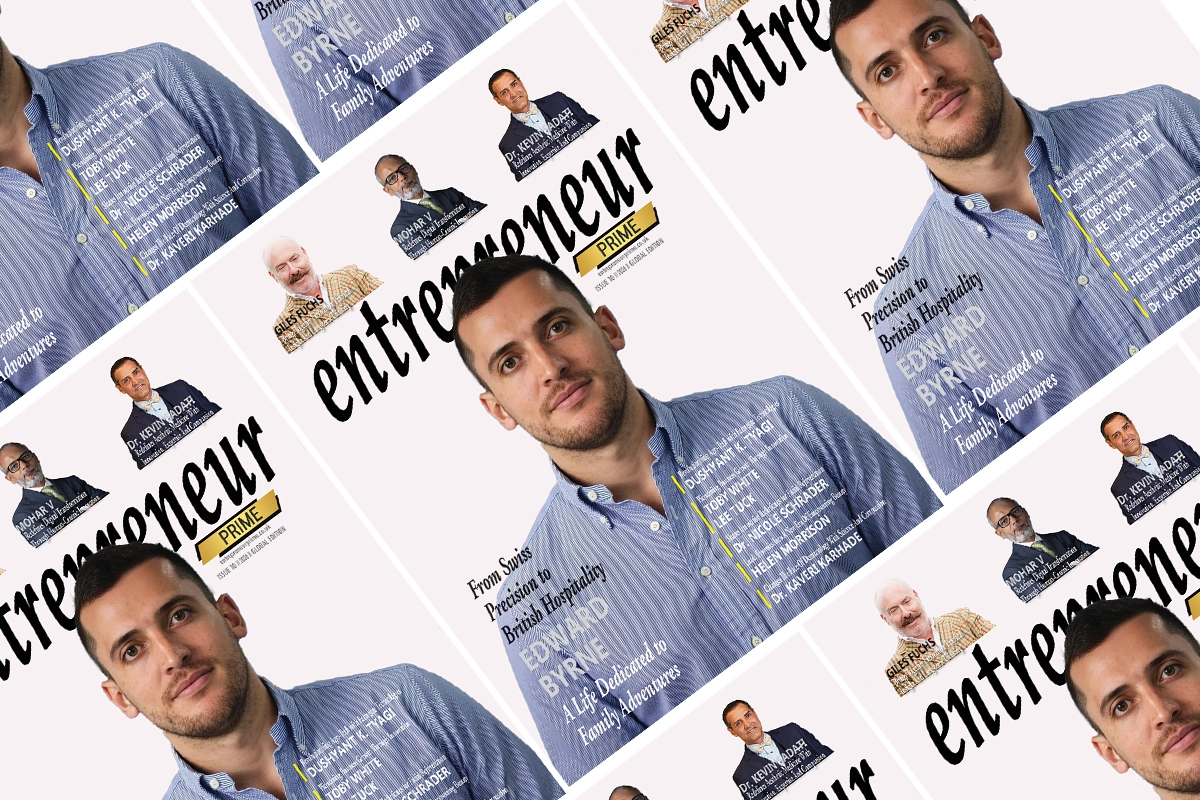























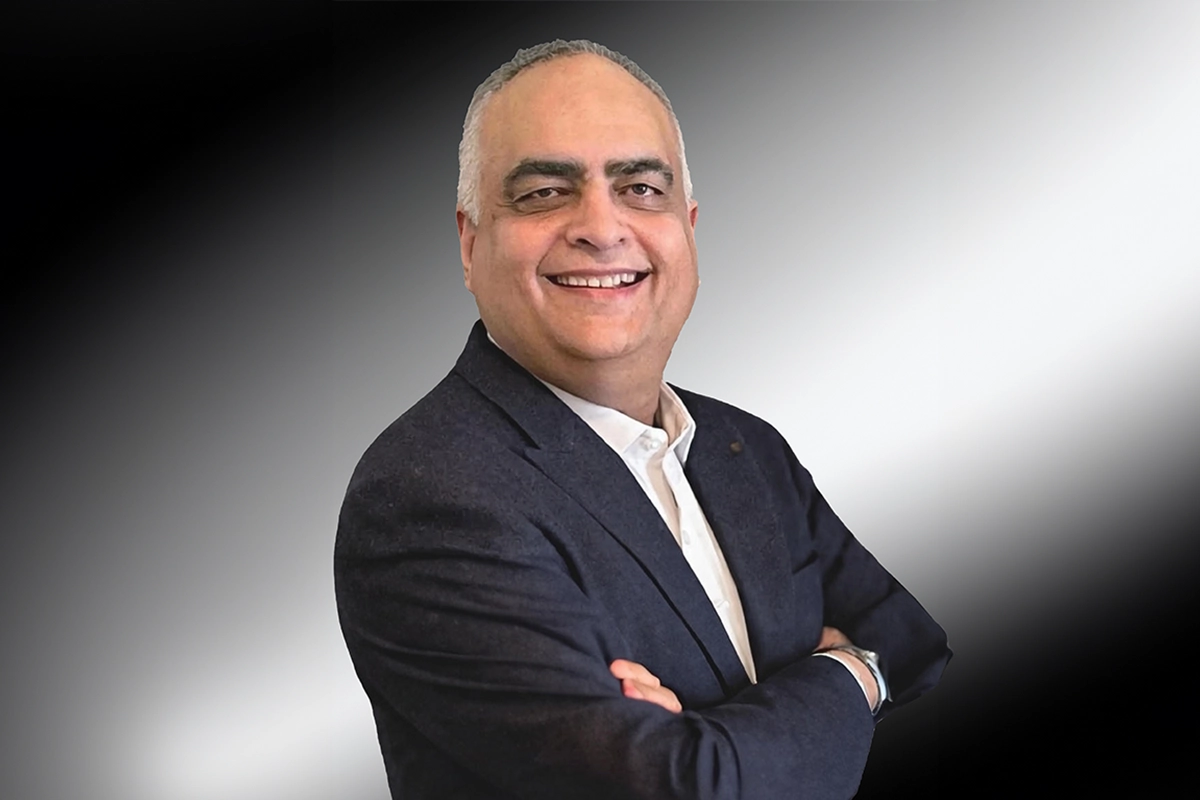
Photo: Dushyant K. Tyagi, visionary behind e-NAM and Farmgate Technologies, leading the future of digital agriculture.
Transforming India’s Agriculture Through Digital Innovation
Dushyant K. Tyagi, the driving force behind e-NAM and Farmgate Technologies, has revolutionized India’s agriculture by integrating cutting-edge technology, empowering millions of farmers, and setting global benchmarks in agri-digitization.
D ushyant K. Tyagi stands as a testament to the transformative power of vision, innovation, and unwavering commitment to public good. With a career spanning over three decades, he has emerged as a trailblazer in India’s agricultural sector, reshaping its landscape through pioneering digital interventions. His leadership in the implementation of e-NAM, the world’s largest agri-trading platform, has not only revolutionised commodity trading but also empowered millions of farmers, traders, and stakeholders across the nation. This monumental achievement, alongside his groundbreaking work with initiatives like eFarmmarket, underscores his ability to bridge the gap between policy, technology, and grassroots impact.
What sets Dushyant apart is his holistic approach to agricultural digitisation. By leveraging cutting-edge technologies such as artificial intelligence, blockchain, and geospatial tools, he has created scalable, sustainable solutions that transcend traditional barriers. His mentorship of agritech startups further cements his role as a catalyst for innovation, fostering ventures that complement his vision of a digitally empowered agricultural ecosystem. TIME magazine’s recognition of his contributions highlights not only his individual brilliance but also the global relevance of India’s agricultural transformation.
Dushyant Tyagi’s innovative leadership in agri-tech has transformed Indian agriculture, empowering farmers and setting a global standard for digital inclusion in farming.
In this exclusive interview, Dushyant reflects on his journey, the challenges overcome, and the lessons learned. His insights offer a roadmap for aspiring entrepreneurs and policymakers alike, demonstrating how collaboration, transparency, and farmer-centric innovation can drive systemic change. As we delve into his story, it becomes clear that Dushyant K. Tyagi is not just a leader in agribusiness but a visionary whose work continues to inspire and uplift an entire sector.
How did it feel to see your work and contributions to India’s agriculture sector featured in TIME magazine? What does this recognition mean to you personally and professionally?
Seeing India’s agricultural transformation reflected in a global platform like TIME was deeply humbling. Personally, it reaffirmed a lifelong belief that meaningful work—when rooted in public good—eventually finds its voice. Professionally, the recognition was less about an individual and more about validating India’s quiet, large-scale digital experimentation in agriculture. It strengthened my conviction that farmer-centric technology, when designed with integrity and scale, can become globally relevant.
“Begin with transparency, layer trust, and allow private innovation to build on public digital rails.” – Dushyant K. Tyagi,
The TIME article highlights how digital interventions are reshaping India’s agriculture landscape. Can you elaborate on the role Farmgate Technologies played in this transformation?
Farmgate Technologies has focused on one core principle: markets work best when information flows freely and trust is embedded digitally. Our role has been to build and integrate platforms that bring transparency to price discovery, quality assessment, logistics, and settlement—creating interoperable systems that align farmers, traders, institutions, and policymakers.
The feature positions e-NAM as a global benchmark for agri-digitisation. How do you envision India’s agricultural digitisation efforts influencing other developing nations?
India’s experience demonstrates that digital public infrastructure in agriculture can scale even in fragmented, smallholder-dominated systems. e-NAM offers a replicable blueprint: begin with transparency, layer trust, and allow private innovation to build on public digital rails.
What were the biggest challenges you faced while implementing e-NAM, and how did you overcome them?
The toughest challenges were not technological but institutional—change management, state-level diversity, and behavioural inertia. These were addressed through adaptive platform design, sustained stakeholder engagement, and incremental demonstration of value.
The TIME article emphasises collaboration between the government and private sector. How has this partnership been instrumental in the success of projects like e-NAM?
e-NAM succeeded because of a clear division of roles. Government provided legitimacy, scale, and policy backing, while the private sector delivered execution capability, innovation, and speed—ensuring public objectives were met without compromising efficiency.
e-NAM is now the world’s largest agri-trading platform. What were the key milestones that contributed to its scaling, and what’s next for the platform?
Key milestones included nationwide mandi integration, farmer onboarding at scale, digital payments, quality assaying, and inter-state trade enablement. The next phase focuses on AI-led quality analytics, logistics optimisation, traceability, and deeper global market integration.
With over 19 million farmers on e-NAM, how has the platform transformed the lives of small and marginal farmers?
For small and marginal farmers, the most meaningful change has been visibility and choice. Transparent price discovery, quicker payments, and reduced dependency on local intermediaries have collectively improved market participation.
Beyond e-NAM, Farmgate Technologies has pioneered platforms like eFarmmarket. How do such innovations bridge the gap between farmers and markets?
Such platforms enable demand-driven production, assured offtake, and quality-linked pricing while integrating logistics, finance, and compliance—making market access viable even for smaller producers.
You’ve mentored start-ups like Nebulaa Technologies and Viation Sciences. How do these ventures complement your vision for digital agriculture?
These ventures strengthen critical layers such as objective quality assessment, biological inputs, and data-driven decision support—ensuring that large platforms remain grounded in field realities.
What lessons from India’s agricultural digitization journey do you think can be applied globally to address food security and farmer welfare?
The central lesson is that inclusion and scale must precede perfection. Public digital infrastructure combined with private innovation can deliver food security while safeguarding smallholder interests.
Based on your decades of experience, what advice would you give to young entrepreneurs looking to make an impact in the agri-tech space?
Understand agriculture as a system, not a single problem. Design patiently, respect constraints, and align commercial success with farmer outcomes.
Looking back at your career, what do you consider your proudest achievement, and how do you hope to inspire the next generation of agribusiness leaders?
Contributing to systems that outlive individuals—platforms that continue to serve farmers at scale. I hope to inspire future leaders to think institutionally, act ethically, and measure success through lasting impact.