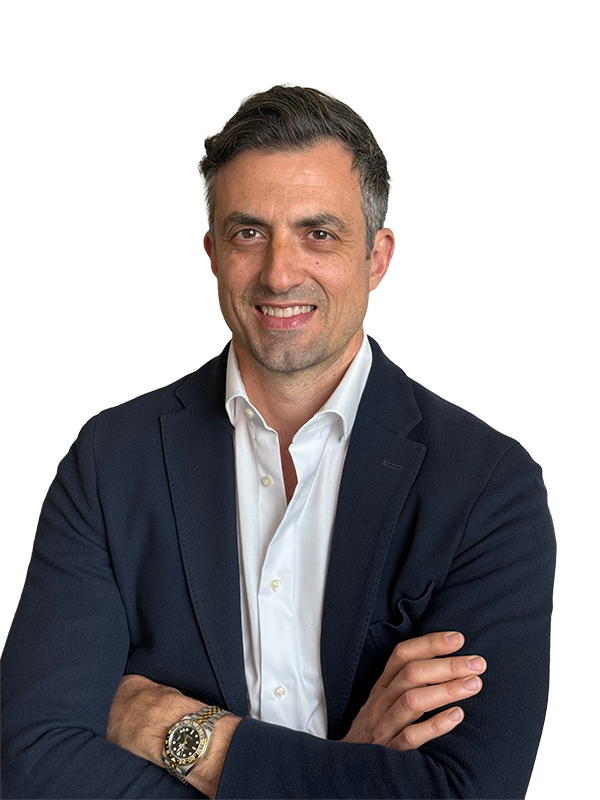






















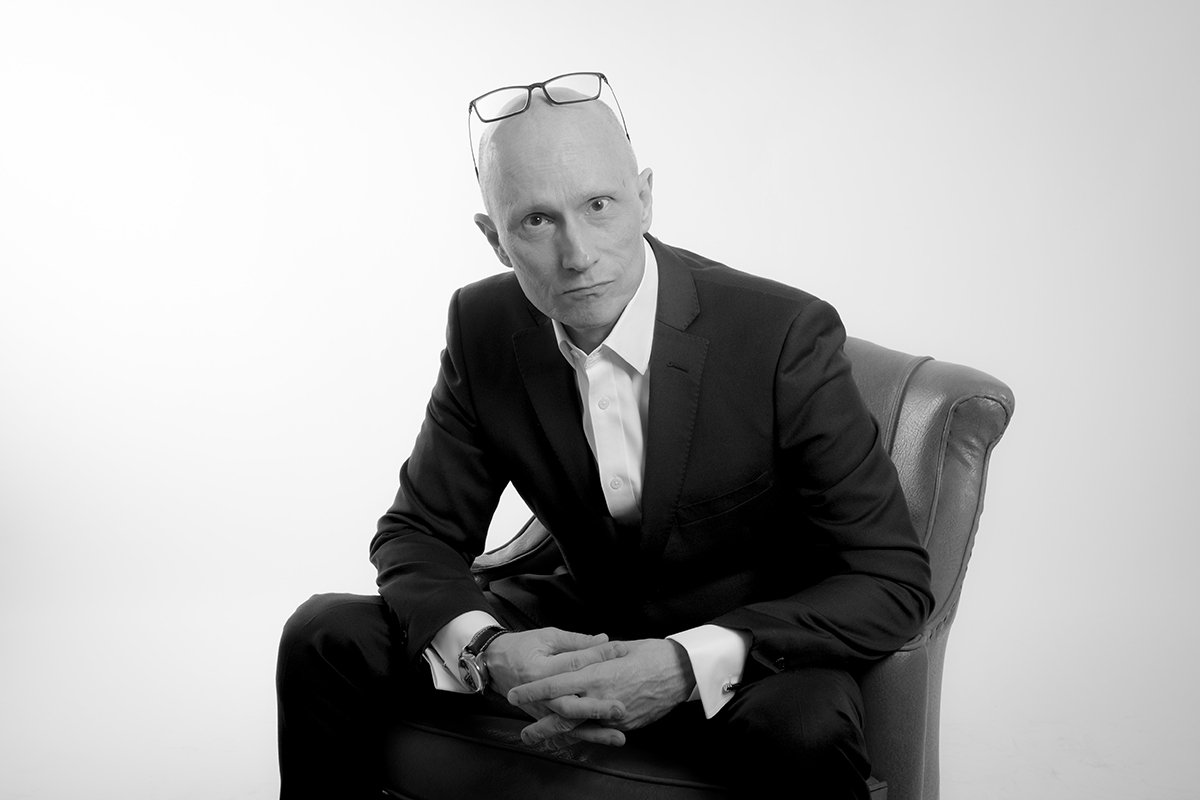
Photo: Perry Offer: A Visionary Leader Revolutionising Business with Simplicity and Focus
Embracing Simplicity, Overcoming Challenges, Transforming Businesses
Perry Offer shares his journey of resilience and his visionary approach to simplifying business processes, revolutionising companies, and promoting focused strategies to thrive in an increasingly complex global marketplace.
By Bernard Bale
I n the realm of global commerce, there exist remarkable individuals whose contributions transcend the bounds of conventional business strategy, inspiring countless others to approach challenges with purpose and precision. Perry Offer exemplifies this calibre of entrepreneurial excellence. From a young age, Perry’s resilience and forward-thinking mindset shaped his approach to life and business. Having confronted adversity early—when his father’s abrupt departure marked a pivotal moment in his childhood—Perry forged an independent spirit that has fuelled his career and set him apart as a luminary in his field.
Known for his emphasis on the power of simplicity, Perry has made a lasting impact on businesses large and small, turning potential failures into thriving success stories through strategic clarity and uncompromising focus. A visionary problem-solver, Perry transformed operations at companies, such as Wood Hosiery, where his innovative approach revolutionised production processes, pushing efficiency to unprecedented levels. His determination to strip complexity from business systems remains his hallmark, earning him a reputation as a sought-after consultant who has steered companies away from crisis and propelled them towards market leadership.
As a thought leader, Perry challenges contemporary business paradigms with fearless conviction, denouncing over-complication and inefficiency—be it within the boardroom or in government policy. His philosophy advocates cutting through the noise and focusing on unshakeable essentials, empowering entrepreneurs to adapt, thrive, and innovate without losing sight of their core mission. Perry’s insights into emerging technologies, globalisation, and the challenges of geopolitics offer invaluable tools for any leader navigating the turbulent landscape of modern commerce.
Perry Offer exemplifies visionary leadership, inspiring success by simplifying operations and fostering resilience, clarity, and focus in modern businesses.
In this interview, Perry unveils the principles that have defined his career and shares pragmatic guidance for businesses of all sizes—from startups seeking focus to established players striving for sustainable simplicity. His wisdom serves as a much-needed beacon in an age where red tape, political correctness, and unnecessary complexity threaten to stifle the spirit of innovation. Through Perry’s words, readers of Entrepreneur Prime are invited to rethink their approach to leadership, problem-solving, and adaptability—learning not just how to survive in this fast-evolving world, but how to succeed.
You’ve emphasized the importance of simplicity in business and life. Can you share some examples from your career where simplicity led to success?
I have never been a half-hearted person. If I take something on I just have to give it my best shot, take a real interest in whatever I am working on and consider ways to make the process more streamlined and the company’s revenue stronger and more efficiently earned. I have always been quite revolutionary and I still am. I had a book-keeping client called Wood Hosiery with whom I was then offered a full-time job as Director of Finance. That was in 1981 and I was only 22 but was ahead of my years in understanding the needs of such a role and, more importantly, the needs of the company.
One of the very good things about this company was that they recognised the need to evolve.
As an example, the company was doing well but stagnating a little. Stagnation means that things start to go backwards, profit margins begin to narrow and the roadway to problems beckons. So, the situation needed a review and with my prompting we discovered a way in which we could improve profits and service at the same time without jeopardising what we already had.
“Step back from your business and survey it—you’ll soon see the knots of complication that breed inefficiency.” – Perry Offer
We found that our most profitable area was supplying to retailers on what was basically an own-label basis. I did quite a lot of research into the problems that retailers had with this and looked into ways in which we could offer a better system.
One of the major problems was that taking orders for 100 boxes of light tan tights and 100 boxes of dark tan tights meant that the tights were being made individually to colour and this taking several weeks to deliver. My research showed that if we simply had a large quantity of white tights in one place and could just dye them to order it meant that we could deliver in a few days rather than a few weeks. It made a massive difference to the extent that we were supplying a million pairs a week. We had become specialists in this market and were looked upon, quite rightly, as THE supplier to go to.
“AI is a tool—think of it as a tool and it will remain uncomplicated.” – Perry Offer
At just six years old, you felt the need to take responsibility for your family. How did that early experience influence your approach to leadership and problem-solving?
To be honest, at six years old my first thought was that I now had to take care of myself. I didn’t think of the family at this point but hopefully, they did indeed benefit from my efforts. I mostly felt the need to be independent, as confident as I could be and especially to recognise that changes were needed and that I needed to be willing to embrace them.
“When you’ve reached the top of Everest, stop climbing. Remove yourself and find another challenge to climb.” – Perry Offer
I think that was a very good lesson for me and I try to pass this while approach on to others. Did I want my father to walk out? Of course not. In business there are many things which nobody actually wants to happen but they do and burying one’s head in a bunker on the golf course achieves nothing but increasing the problem. Face it, prepare to change and get on with it. Of course, if you see it coming, that’s even better.
You’ve described British business as being in decline due to over-complication and mismanagement. What concrete steps can businesses or governments take to reverse this trend?”
In a word – simplify! Easier said than done? No, not at all. Step back from your business and survey it and you will soon see the knots of complication that breed inefficiency. Iron them out. At the same time, express yourself to others who can make changes. For instance, we all have MPs and government offices around us. Urge the Government to stay out of free markets. Also, on going regulation and changes of policy are among the biggest sources of unwanted and unessential complications. The lack of simplicity and the uncertainty it spawns is one of the biggest single sources of diminishing confidence which itself stymies investment plans and job creation.
Ask yourself, is it more complicated to run a business – any business – now than it was ten years ago. Every step of the way new methods, new legislation has been introduced to allegedly simplify things. The reality is that it has caused the roadway to failure to become a motorway.
In your opinion, how can companies strike the right balance between embracing modern technologies like AI and maintaining simplicity?
That is a key point. Let us consider AI in particular. What is it? It is a tool – that’s it. Think of it as a tool and it will remain uncomplicated. Start to think of it as a member of the staff and you will start to complicate matters. It is the same for any form of technology. Use it but keep it in its place.
If your strategy is to simplify your business in the first place then you will already recognise AI and similar technology is simply a tool. Don’t let it become more important than that or it will soon want your job – or your business!
Having worked with businesses of all sizes globally, what are the most common mistakes companies make when they find themselves in crisis?
The most common mistake is opting for incremental changes to the already over-complicated business. The lack of simplicity has already likely created the crisis. It is like a form of pollution. Why add more pollution? If businesses address the more fundamental changes involved in simplification that would lead them out of the crisis. Of course, businesses and their problems are variable but the principles of recovery are near enough all the same.
You argue that political correctness and red tape are strangling British businesses. Can you explain how these factors are affecting business performance and innovation?
Yes, as I have said before, simplicity is the only way forward. Who is going to win the marathon? Will it be the runner who is dressed for the part or will it be the runner who is wearing an overcoat and carrying a suitcase full of things he doesn’t need? I know that is a very basic explanation but many businesses are carrying baggage that is neither wanted nor needed. Some of it has become legally obligatory – more and more lengthy forms to fill in. Some of it has been ‘sold’ as vital or your business will fall behind. Really? How have you survived this long? You started with simplicity and you succeeded. Now you are struggling because you lost touch with your original thinking. The result is that you spend so much time biting your nails that you are no longer innovative.
Your philosophy advocates for cutting through chaos and focusing on essentials. If you were guiding a start-up today, what are the three core principles you’d advise them to adopt?”
There are three main points.
A. Pick just one business niche where if you get 5% of demand it will mean that you will actually over-achieve on your exit target.
B. Identify the one dimension of product or service delivery that is most important to the most valuable potential customers in that niche.
C. Deliver consistently on that dimension and sell when you hit your target valuation. When you have reached the top of Everest you stop climbing, remove yourself and find another challenge to climb. I guess the message is, “Well done but don’t be greedy.”
Looking at the current state of global commerce, what do you see as the biggest opportunities and threats for businesses in the coming decade?
One of the biggest challenges is having the nerve to remain focussed in an increasingly fast-moving world. Opportunities might seem to appear like snow flakes but try to pick one up! Often people give up because their idea does not seem to be working. Analyse, is the idea still a good one? If so then it is the methodology that needs changing, probably simplifying. The whole world is in the grip of complication but you don’t have to subscribe to it. Keep focussed on your original concept.
The biggest threat is the bankruptcy of governments along with the increasingly unstable political and geopolitical landscape.
With so much nonsense going on, there has never been a more important time or need for simplicity.