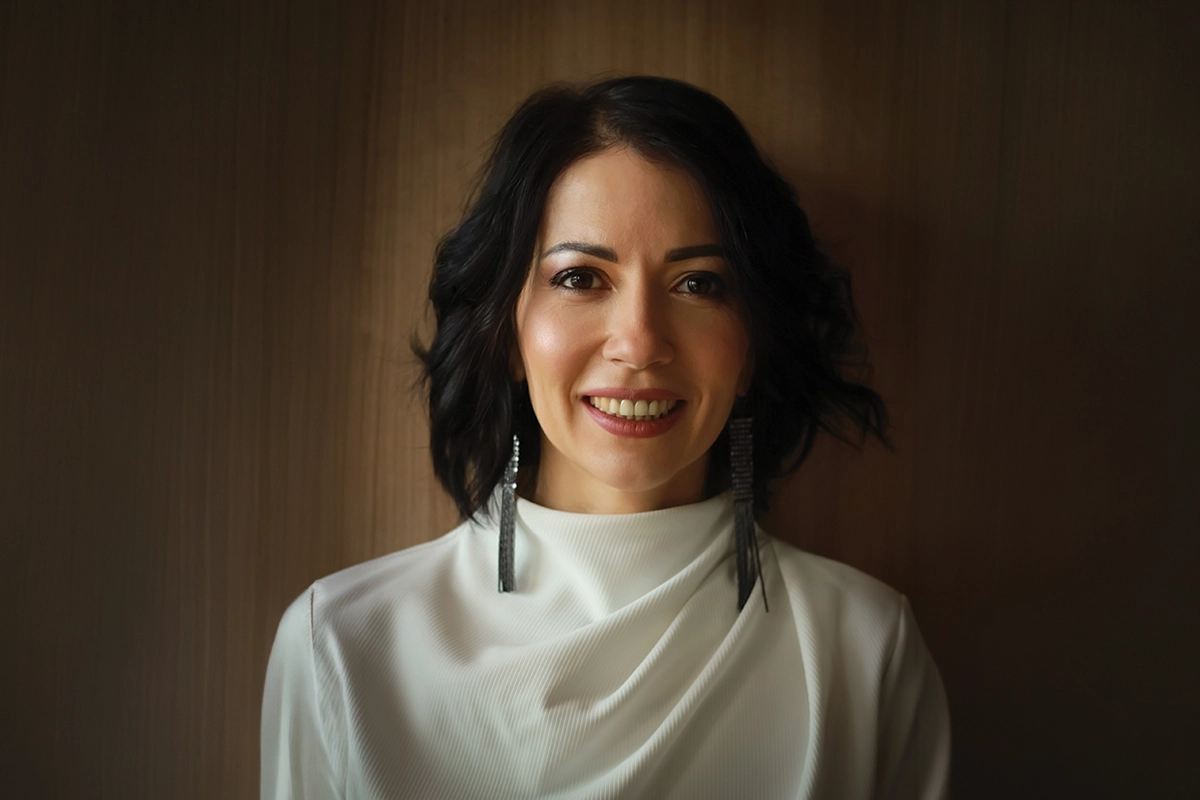





















Photo: Dana Flanagan, Founder and Chief Authority Architect, helps entrepreneurs and executives transform professional expertise into credibility, influence and strategic opportunity.
Beyond Visibility Towards Lasting Professional Authority
Dana Flanagan explains how entrepreneurs can transform expertise into authority through strategic positioning, credibility, relationships and visibility, arguing that trust rather than attention will define tomorrow’s most influential business leaders.
S ome entrepreneurs build businesses. Others build reputations. Dana Flanagan has spent more than two decades understanding the powerful relationship between the two — and why expertise, however impressive, does not automatically translate into influence.
For this issue, we had the opportunity to speak with a strategist whose work addresses one of the defining challenges facing modern founders and executives: how do you become recognised for the value you have already created? Flanagan’s answer is both simple and compelling: “Authority is not claimed. It is engineered.”
That philosophy runs through every aspect of her work.
Drawing upon more than twenty years of experience across sales leadership, business development, real estate and strategic growth, Flanagan has developed an approach that goes far beyond conventional personal branding. She understands that genuine professional authority is created through the careful alignment of positioning, credibility, communication, relationships and visibility. Being seen is useful; being trusted is transformational.
What particularly impresses us about Flanagan is her refusal to confuse noise with influence. At a time when entrepreneurs are constantly encouraged to post more, speak louder and chase greater numbers of followers, she offers a more sophisticated proposition. Visibility without purpose can quickly become distraction. Authority, by contrast, gives visibility direction.
Her work as Founder and Chief Authority Architect reflects this thinking. Rather than treating public relations, media exposure, executive branding, speaking opportunities and digital presence as isolated marketing activities, she brings them together as part of a strategic ecosystem. The objective is not simply to make a client more famous. It is to ensure that the right people understand that individual’s value, expertise and perspective — and that this recognition leads to meaningful opportunities.
There is considerable business wisdom in that distinction.
Flanagan also brings something to her advisory work that cannot be manufactured through theory alone: lived commercial experience. Years spent building teams, developing business, generating revenue and navigating competitive environments have given her a practical understanding of how decisions are made and relationships are formed. She knows that people respond not only to credentials, but to confidence, clarity and trust.
Her observations throughout our conversation are particularly relevant as artificial intelligence dramatically lowers the barriers to producing content. When almost anyone can generate articles, posts and marketing material within seconds, simply producing more cannot remain a meaningful competitive advantage. Perspective, judgement, credibility and authentic experience become increasingly valuable.
Flanagan understands this shift remarkably well. She argues that tomorrow’s influential leaders will not necessarily be those who dominate the largest platforms, but those who establish the strongest trust. It is an important message for entrepreneurs who have become conditioned to measure influence through followers, impressions and engagement rather than reputation, relationships and opportunity.
Perhaps the most compelling aspect of her philosophy is that she is ultimately encouraging accomplished people to recognise the commercial value of what they already know. Many exceptional founders and executives spend years developing expertise while leaving their reputation almost entirely to chance. Flanagan challenges them to become as deliberate about building authority as they are about building their businesses.
At Entrepreneur Prime, we celebrate entrepreneurs who do more than follow established formulas. We are interested in people who identify changing realities, develop distinctive ideas and help others see business differently. Dana Flanagan belongs firmly in that conversation.
Her work reminds us that success may establish a career, but authority can extend its reach. When expertise is combined with clarity, credibility and intelligent visibility, doors begin to open differently.
Our conversation with Dana Flanagan explores precisely how that happens — and why, in an increasingly crowded marketplace, becoming known for what you know may prove just as important as knowing it in the first place.
Highlights
- Authority must be deliberately built rather than simply claimed.
- Expertise alone does not guarantee recognition or opportunity.
- Visibility attracts attention, while authority creates trust.
- Strategic positioning can dramatically change how the marketplace perceives an executive.
- Founders should communicate why they matter, not merely what they do.
- More content does not necessarily create greater influence.
- Strong authority begins with clarity, credibility and consistency.
- Public relations remains powerful because third-party validation creates trust.
- Marketing amplifies positioning — good or bad.
- AI can improve efficiency but cannot manufacture lived experience or credibility.
- Relationships remain fundamental to meaningful business growth.
- Future industry leaders may be distinguished more by trust than follower numbers.
- Professional authority develops through repeated, intentional signals over time.
- Leaders should become known for a specific outcome or perspective.
- Successful personal brands connect reputation with genuine commercial opportunity.
Your tagline says, “Authority is not claimed. It is engineered.” What was the defining moment that led you to this philosophy?
For years, I watched incredibly talented leaders get overlooked while less qualified people became the recognized experts. It wasn’t because they were smarter. It was because they understood how perception shapes opportunity. That realization changed everything for me. Authority isn’t something you declare. It’s something you intentionally build through positioning, credibility, consistency, and strategic visibility. The leaders who create influence by design are the ones who earn access to the biggest opportunities.
Many founders believe that being great at what they do is enough. Why do you think so many exceptional entrepreneurs remain under-recognized?
Because expertise doesn’t automatically create opportunity. Most founders invest years becoming exceptional at their craft but almost no time becoming known for it. They assume the market will eventually notice. Unfortunately, it doesn’t work that way. The marketplace rewards clarity, credibility, and visibility. If people don’t understand your value, they can’t buy into it, refer you, or invite you into bigger conversations.
You distinguish between visibility and authority. Can you explain the difference, and why confusing the two can limit a business’s growth?
Visibility gets attention. Authority earns trust. Someone can have millions of followers and very little influence in the rooms where real decisions are made. Authority is what causes investors, media, strategic partners, and industry leaders to seek you out because they believe you have something valuable to contribute. The goal isn’t simply to be seen. It’s to become the person people think of first when opportunity arises.
You’ve spent more than two decades in sales leadership and business development. How did those experiences shape your approach to building executive authority today?
Sales taught me that people rarely buy products. They buy confidence, trust, and certainty. Business development taught me that growth happens through relationships, not transactions. Over the years, I realized that the executives creating the biggest opportunities weren’t necessarily the smartest people in the room. They were the ones who knew how to communicate value, build strategic relationships, and position themselves as trusted advisors. That philosophy shapes everything I do today.
When you begin working with a founder or executive, what are the most common positioning mistakes you uncover?
Most people lead with what they do instead of why they matter. Their messaging sounds like everyone else in their industry. They describe services instead of outcomes, credentials instead of transformation, and experience instead of perspective. My first job is helping them identify what makes them impossible to replace, not simply qualified to compete.
The digital world encourages constant content creation. Do you believe entrepreneurs are producing too much content and not enough strategic influence?
Absolutely. We’ve mistaken activity for strategy. More content doesn’t automatically create more authority. Every piece of content should reinforce a clear reputation. If your audience can’t explain what you’re known for after following you for six months, then volume isn’t the problem. Positioning is. I would rather see someone publish one highly intentional piece each week than seven pieces that dilute their expertise.
You describe authority as an “architecture.” What are the essential building blocks of a credible authority brand in today’s marketplace?
It starts with clarity. You have to know exactly what problem you solve and why you’re uniquely positioned to solve it. From there, credibility comes through proof, strategic visibility, trusted relationships, and consistency over time. Authority isn’t built through one viral moment. It’s built through hundreds of intentional moments that reinforce the same message until the marketplace begins to associate your name with a specific outcome.
Can you share a success story where a client’s perception changed dramatically—not because they became more skilled, but because they became better positioned?
One executive came to me with decades of experience but very little visibility outside their immediate industry. We didn’t change their expertise. We changed how the market experienced it. By refining their positioning, clarifying their message, and strategically expanding their visibility, they began attracting speaking opportunities, higher-level partnerships, and conversations with decision-makers who had never known they existed. Their value didn’t change. Their perception did, and that changed everything.
How important is public relations in an era dominated by social media? Has PR become more valuable or simply evolved?
I believe PR is more valuable than ever because credibility has become increasingly difficult to earn. Social media creates visibility. Third-party validation creates trust. Media placements, podcasts, industry publications, and strategic speaking opportunities provide external proof that reinforces authority. The leaders who combine digital visibility with earned credibility will have a significant advantage over those who rely on social media alone.
For entrepreneurs just starting to build their personal brand, what are the first three strategic steps they should take before investing heavily in marketing?
First, get crystal clear on the transformation you provide, not just the service you sell. Second, define the audience you want to become known for serving. Third, align your messaging, digital presence, and reputation so they consistently communicate the same story. Marketing amplifies what’s already there. If the foundation isn’t clear, marketing simply amplifies confusion.
AI is making it easier than ever to create content. How do you believe leaders can maintain authenticity and credibility in a world where everyone has access to the same tools?
AI is an incredible tool, but it can’t replace lived experience, judgment, or perspective. The leaders who will stand out are the ones who use AI to increase efficiency while allowing their own voice, values, and expertise to remain unmistakable. Technology can help you communicate faster, but it cannot manufacture trust. Trust is still built through authenticity, consistency, and real-world experience.
Looking ahead five years, what do you think will separate the entrepreneurs who become trusted authorities from those who simply remain visible online?
The next generation of influential leaders won’t be the loudest. They’ll be the most trusted. They’ll have clear positioning, meaningful relationships, earned credibility, and a reputation that extends beyond social media. As AI makes content easier to create, trust becomes the true differentiator. The entrepreneurs who intentionally build authority instead of chasing attention will be the ones leading industries, shaping conversations, and creating lasting influence.