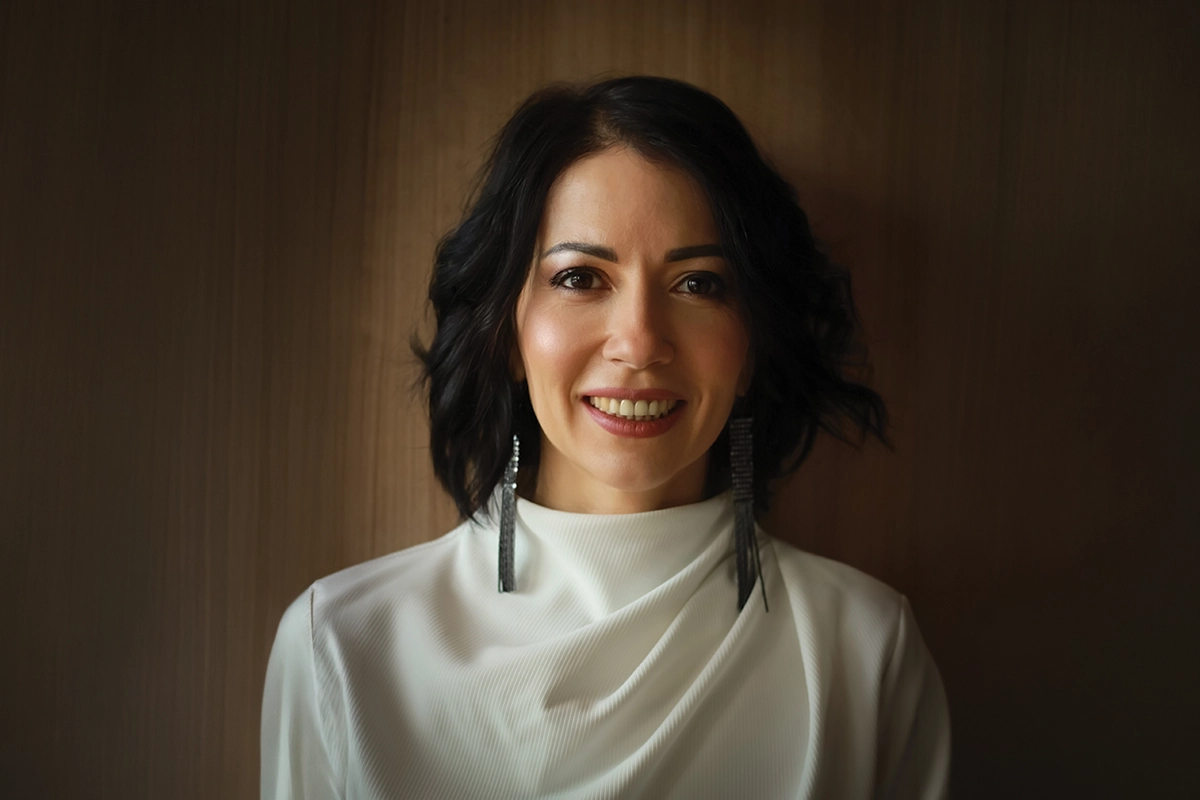























Photo: Zhenni Jackson, co-founder and CEO of opAIda, is applying lessons from luxury beauty, wellness and entrepreneurship to the rapidly evolving world of enterprise AI.
From Luxury Beauty To Enterprise AI
Zhenni Jackson’s journey from luxury beauty and wellness to enterprise AI reveals how empathy, reinvention, disciplined execution and bold leadership can transform constraints into scalable opportunities for businesses and people.
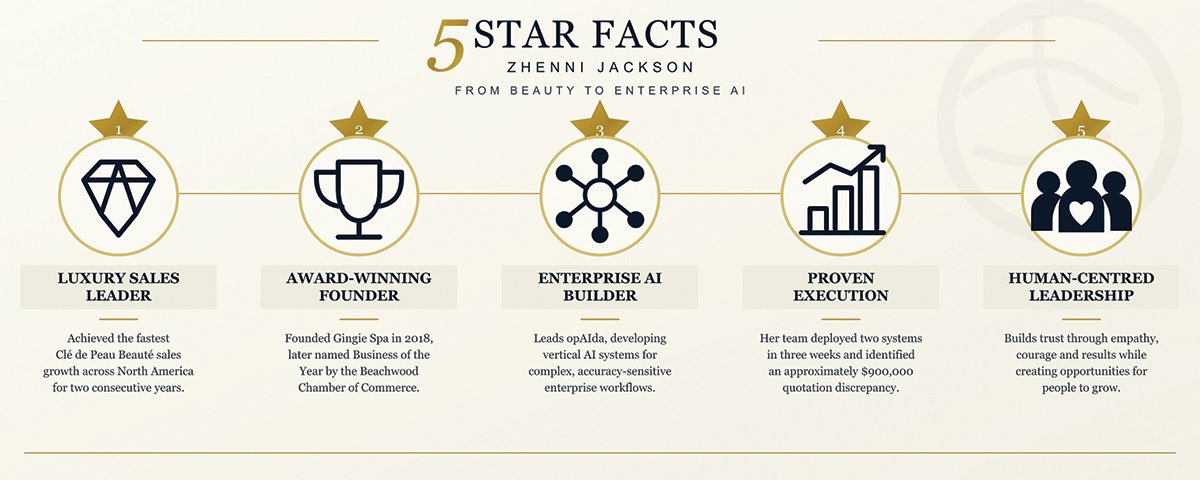
S ome entrepreneurial journeys follow a carefully mapped path. Zhenni Jackson’s has been shaped by curiosity, courage and an exceptional ability to turn limitations into opportunities. From achieving the fastest sales growth for Clé de Peau Beauté at Saks Fifth Avenue across North America for two consecutive years to founding an award-winning wellness business and leading an enterprise AI company, she has carried one principle through every chapter: meaningful success begins with understanding people.
That human-centred approach now informs Zhenni Jackson work as co-founder and CEO of opAIda. The company is developing an AI-powered regulatory auditing portal for pharmaceutical, biotechnology, and contract research organizations. The platform is designed to help teams prepare regulatory reports, maintain traceable oversight across complex workflows, apply risk-based quality management, and monitor clinical-trial conduct against approved protocols.
What makes Jackson’s story particularly compelling is the breadth of experience behind her leadership. Beauty taught her the psychology of trust. Wellness showed her the value, and physical limits, of personal service. Entrepreneurship developed her resilience, while technology gave her a means of multiplying impact. Rather than allowing her previous career to define the boundaries of her next one, Jackson has transformed each experience into a fortune.
Her achievements are accompanied by an equally powerful sense of responsibility. Whether supporting other entrepreneurs, encouraging women to enter unfamiliar industries or building a company where talent can flourish, Jackson measures leadership by the opportunities it creates for others.
This Entrepreneur Prime interview explores the determination behind her reinvention, the relationships that opened unexpected doors and the bold execution that earned enterprise trust. Zhenni Jackson is building more than an AI business. She is demonstrating how empathy, persistence and commercial vision can come together to shape a more capable and more human future.
Highlights
- Jackson achieved the fastest sales growth for Clé de Peau Beauté across its North American doors for two consecutive years.
- Her experience at Saks Fifth Avenue taught her that exceptional service begins with listening, humility and trust.
- She founded Gingie Spa & Massage in Beachwood, Ohio, in 2018.
- Gingie Spa was named Business of the Year by the Beachwood Chamber of Commerce in 2022.
- The physical limitations of running a wellness business inspired her to explore ways of creating value at scale.
- A conversation with her future co-founder, Dr YZ, helped begin her transition into AI.
- Jackson co-founded opAIda to deliver vertical AI systems for complex enterprise workflows.
- Her team placed two systems into production within three weeks for a major North American aluminium company.
- One system identified an approximately $900,000 historical quotation discrepancy.
- Jackson believes enterprise AI must move beyond impressive demonstrations to reliable, measurable business outcomes.
- She sees AI as a means of releasing people from repetitive work rather than diminishing the value of human beings.
- Her leadership philosophy focuses on multiplying opportunity, confidence and capability in others.
- She encourages women to begin before they feel completely ready.
- Jackson balances Silicon Valley, New York and Princeton through running and a strong sense of purpose.
Can you share a bit about your time at Saks Fifth Avenue working with Clé de Peau Beauté, where you achieved the fastest sales growth across North America for two consecutive years? How did that experience shape you as a leader
My experience at Saks Fifth Avenue with Clé de Peau Beauté was one of the periods when I really dug the ground and built the foundation for how I think about business and leadership today.
I was fortunate to achieve the fastest sales growth across North America for two consecutive years. But what stayed with me was not simply the sales numbers. It was understanding a fundamental question: Why do people buy—and why do they choose to buy from me?
Luxury beauty is an extremely personal business. I couldn’t succeed simply by selling a product. I had to listen carefully, understand what each customer truly valued, build trust, and create an experience that made her feel special—an experience she/he would want to come back to feel again.
I remember one time I knelt down on the floor to carefully wrap a large gift box for a client. She was deeply touched by that small gesture. She then told me something I have never forgotten: in Japan, sales professionals traditionally avoid wearing jewelry that is more expensive or eye-catching than their clients’ because they never want to overshadow the person they are serving.
That stayed with me. There is a psychology—and also a humility—to great service. The client should be in the spotlight. She should feel that, in that moment, she is the most important person in the room.
That experience also taught me that leadership is not defined by a title. Leadership is about earning trust and respect through what you give—whether it is uplifting energy, sincere care, solid knowledge, genuine encouragement, or opportunity. A great leader helps people believe that they can become more confident, more capable, and more abundant in what is possible for their lives.
Those lessons have followed me through every stage of my career—from beauty and wellness to entrepreneurship, enterprise technology, and now AI.
The industries may look completely different, but the principle has never changed: understand people, make them feel valued, earn their trust, and create something that genuinely makes their lives better.

Bringing together international experience, cultural awareness and a deep understanding of service.
Looking back, what key moments or decisions helped you transition into the tech and AI space?
I don’t think my transition into technology and AI happened because of one single moment. It was a progression driven by curiosity, but even more by a mindset I have carried throughout my career: when I encounter a constraint, I look for the breakthrough hidden inside it.
My background is in economics and finance, but my career has taken me through sales, business development, entrepreneurship, and now technology. I have always been fascinated by how businesses grow—and especially by how they overcome the obstacles that prevent them from reaching the next level.
After my success in luxury beauty, and with the encouragement of one of my clients, I took the entrepreneurial leap and founded Gingie Spa & Massage in Beachwood, Ohio, in 2018. We built the business from the ground up, and in 2022, Gingie Spa was recognized as Business of the Year by the Beachwood Chamber of Commerce. That recognition meant a great deal to me because it reflected the trust we had earned in one of Northeast Ohio’s most established business communities. But success also revealed a constraint.
I was a very compassionate and skilled therapist myself, and I genuinely loved the work. There was something deeply meaningful about being able to help another person directly through my own hands—to relieve pain, reduce stress, and make someone feel better before they walked out the door. But I also discovered a fundamental constraint. The work is extremely physically demanding. There are only so many clients one therapist can serve in a day, and only so many hours your own body can sustain. As an entrepreneur, that made me think differently. I began asking myself: If I can create this much value with my own two hands, how can I create value for hundreds, thousands, or even millions of people? Building a spa team was one answer, but even that had limitations. Skilled therapists are difficult to recruit and retain, and the business remains highly dependent on human labor. A spa is a very traditional, people-intensive business. No matter how strong the demand is, growth depends heavily on the availability of skilled therapists—and in the United States, that talent is in short supply. I began asking myself: How do I break through this constraint? How do I build something that can truly scale? That realization became part of my journey toward technology and eventually AI. I didn’t want to stop helping people directly; I wanted to find a way to multiply the impact.
That is one of the biggest differences between my previous work and what I am building today. As a therapist, I could change someone’s day with my own hands. As an entrepreneur and technology leader, I have the opportunity to build something that can empower many people at the same time. For me, that is what scaling really means—not simply making a business bigger, but multiplying the value and impact I am capable of creating.
Around that time, generative AI exploded into public awareness. In 2023, while I was on my way to New York for an AI seminar, I called Dr. YZ, who would later become my co-founder at opAIda. I wanted to talk with him about AI and what this technology could mean for the future of business. That conversation was part of the beginning of a completely new chapter for me.
So when people ask me how I moved from luxury beauty and wellness into AI, I don’t see those chapters as disconnected at all. There is a common thread: I am always looking for growth, and when I encounter a constraint, my instinct is to search for the breakthrough on the other side of it. That mindset—not technology alone—is what brought me into AI.
Serial Entrepreneurship & Impact
You’ve built a career across different industries and consistently delivered results. What is the common thread that has driven your success?
The common thread throughout my career is a mindset: I see possibilities along with constraints, I connect people and resources, and then I execute.
I have worked across very different industries—from luxury beauty and wellness to entrepreneurship, enterprise technology, and now AI. On the surface, these worlds may seem unrelated. But I have discovered that the fundamentals of success are remarkably similar.
First, you have to understand people. What do they really need? What problem are they trying to solve? What makes them trust you? My years in luxury beauty taught me that people don’t simply buy products or services—they buy value, confidence, trust, and ultimately a better outcome to make them feel better.
Second, I naturally look for possibility inside constraints. When something is difficult, my instinct is not simply to accept the limitation. I ask, Is there another way? What am I not seeing yet? Who should I talk to? What resources can I bring together? Many of the biggest transitions in my career have started with those questions.
Third, I believe deeply in the power of relationships and connecting people. To me, networking is not collecting business cards or LinkedIn connections. It is building genuine trust, understanding what different people can contribute, and finding opportunities where everyone can create value together. Some of the most important opportunities in my life have come from relationships built years earlier without knowing where they would eventually lead.
But possibility and relationships mean very little without execution. Ideas are everywhere. Execution is what turns possibility into reality. Once I believe in something, I bring tremendous energy and persistence to making it happen.
Perhaps the final common thread is that I have never allowed my previous chapter to define the boundaries of my next one. I am willing to learn, to reinvent myself, and sometimes to enter a room where I am not the expert.
I like to say: your past should give you experience, not boundaries.
Every chapter gives me something to carry into the next. That is why, when I look at my journey today, I don’t see several different careers. I see one continuous journey of learning, connecting, creating, and turning possibilities into results.

Every step counts.”
People often describe you as someone who creates momentum and impact wherever you go. Can you share a specific example of when you turned a challenging situation into a breakthrough?
I think one of my strengths is thinking outside the box and being willing to take a bold leap when I believe in an opportunity. When we started opAIda, one of our biggest challenges was very simple: we had talented tech engineer team, but as a new company, how could we get enterprise customers to trust us?
I saw an advertisement for an AI conference at Fordham University in New York. No one invited me. There was no guarantee that attending would lead anywhere. I bought the ticket myself and spent my weekend there because I thought, Maybe I will meet someone I should know. At the conference, I met the former president of the Fifth Avenue Entrepreneurs Foundation. I became interested in the organization, applied to join, and through that community met a highly respected investment advisor. He later introduced our founding team to the president of another business association, who eventually connected me with the chairman of a major North American aluminum company.
The company had a very real problem. Every day, quotation inquiries were coming from customers through emails, PDFs, engineering drawings, spreadsheets, and other unstructured data. They wanted AI to turn all of that information into a more intelligent and automated quotation workflow. It was exactly the kind of complicated enterprise problem opAIda was built to solve. But there was another challenge: they had already evaluated or worked with more than 20 AI companies without getting the result they wanted. So understandably, they were skeptical. We negotiated for approximately three months. On the day, we expected to sign the contract, but at the last moment additional requirements were introduced and the agreement wasn’t signed.
At that point, I realized something important. The real obstacle was no longer the contract. It was trust. I could have gone back into another round of negotiations. Instead, I made a bold decision. I told our team: Let’s stop trying to convince them with words. Let’s show them what we can do. We started working without waiting for an advance payment. It was a calculated risk, but I believed that if our technology could solve their real problem, the results would speak much more powerfully than another presentation or negotiation.
Within only three weeks, our team put two systems into production. One could read customer emails and related documents, extract and consolidate quotation information, and convert that information into their quotation workflow. The second analyzed and cross-examined approximately 20 years of historical quotation data.
And that is where something remarkable happened. Through that historical analysis, our system identified a quotation discrepancy that indicated the company had undercharged a customer by approximately $900,000. Suddenly, AI was no longer an abstract promise. The value was visible and measurable. The customer paid us and then asked us to take on the next project in their workflow.
I love this story because the breakthrough didn’t begin with a sales call. It began with buying a ticket to a conference on a weekend. One decision led to one relationship, which led to another, and eventually to an enterprise customer. But getting the opportunity was only the first half of the story. Relationships opened the door; courage allowed us to walk through it; execution earned the trust.
That experience reinforced something I believe strongly: when the conventional path reaches a dead end, sometimes you have to create a new path. And when words are no longer enough, let your work speak for you.
What does “striving for excellence” mean to you in practice?
To me, striving for excellence is a conscious behavior.
When we live with self-awareness—when we are truly conscious of who we are, what we are capable of, and what we can contribute—I believe striving to become better is almost a natural direction to choose. If you look at nature, everything living is moving toward growth. A seed does not decide to remain a seed. Given the right conditions, it reaches toward the light and becomes what it has the potential to become. I think human beings have that same natural tendency.
So excellence, to me, is not about competing with other people, and it is certainly not about being perfect. It is about not consciously settling for less when you know you are capable of more. In practice, that means continually asking myself: Can I understand this more deeply? Can I do this better? Can I give more? Can I create greater value? Can I become a better version of myself through this experience?
Of course, we all make mistakes. I have made many. But self-awareness allows us to look at those mistakes honestly, learn from them, and keep evolving. I also believe excellence has to be accompanied by humility. The more you grow, the more you realize how much there is still to learn.
So for me, striving for excellence is not a destination. It is a way of living consciously—continually growing toward the fullest expression of who you can become and what you can contribute to others.

Zhenni Jackson, co-founder and CEO of opAIda, brings human-centred leadership to the rapidly evolving world of enterprise AI.
Leadership & Recognition
You are a Board Director of the Fifth Avenue Entrepreneurs Foundation and an alumna of the Goldman Sachs 10K SB Program. How have these experiences influenced your approach to leadership and entrepreneurship?
Both experiences reinforced something I strongly believe: entrepreneurship is not a solo journey, and leadership means standing with people—sometimes in front to show the direction, sometimes in the center to bring people together, and sometimes behind them to help them succeed.
There are many excellent programs where entrepreneurs can learn how to run and grow a business—from marketing and operations to finance, strategy, and leadership. What impressed me most about the Goldman Sachs 10K Small Businesses Program, however, went beyond the curriculum. It was the fact that Goldman Sachs was willing to put its name, resources, network, and institutional credibility behind small-business owners. That itself was a powerful lesson in leadership and impact.
Small businesses are not really “small” when you look at their collective impact. According to U.S. Small Business Administration statistics, there are roughly 36 million small businesses in the United States, representing 99.9% of all U.S. businesses and employing more than 60 million Americans. When an institution like Goldman Sachs invests in helping entrepreneurs become stronger leaders and build stronger companies, the impact can multiply through employees, families, communities, and the broader economy.
That experience made me think differently about success. Real leadership is not only about becoming powerful; it is about using whatever influence, knowledge, resources, or platform you have to make other people more powerful.
My work with the Fifth Avenue Entrepreneurs Foundation has reinforced that belief from another perspective. The Foundation brings together entrepreneurs, investors, executives, academics, and community leaders while also focusing on encouraging and developing the next generation of entrepreneurs. When you create the right ecosystem and bring the right people together, opportunities emerge that none of us could create independently.
Both experiences have shaped the kind of leader I want to become. I don’t want to measure success only by asking, “How successful can I become?” I would rather ask, “As I grow, how many opportunities can I create for others—and how many people can I help grow with me?” To me, that is when entrepreneurship becomes something larger than building a company. It becomes a way of multiplying opportunity and impact.
You were also recognized with the Outstanding Female Innovation Achievement Award at the United Nations. What did that recognition mean to you, and how does it motivate your current work?
I was deeply grateful to receive the Outstanding Female Innovation Achievement Award from the World Alliance of Asian Women during the 69th Session of the United Nations Commission on the Status of Women.
What made the recognition especially meaningful to me was not simply receiving an award. I believe the greater purpose of recognitions like this is to bring broader awareness to women’s contributions—to innovation, entrepreneurship, business, technology, and society—and to encourage more women to believe in what they can accomplish.
So I receive this recognition with gratitude. If my journey can encourage even a few more women—especially young women—to think, “Maybe I can do this too,” then the recognition has a meaning far beyond me.
An award recognizes one person’s achievement, but its greater value is when it inspires many others to believe in their own possibilities.
As a woman leading in the fast-moving AI industry, what challenges have you faced and how have you navigated them?
AI is moving incredibly quickly, and it remains an industry where women—particularly women CEOs—are still underrepresented.
There can be assumptions about what a technology leader should look like or what background a CEO of an AI company should have. I don’t spend much energy fighting those assumptions directly. I prefer to challenge them through results.
I surround myself with exceptional technical talent. I ask questions constantly. I learn quickly. And I focus intensely on customers, strategy, partnerships, capital, and execution.
I also believe diversity of experience is an advantage in AI. Technology cannot exist in isolation. AI ultimately has to serve human beings and businesses. Understanding people, industries, culture, relationships, and markets is just as important as understanding technology.
My approach has always been: don’t wait for someone else to decide whether you belong in the room. Bring enough value that your presence becomes undeniable.
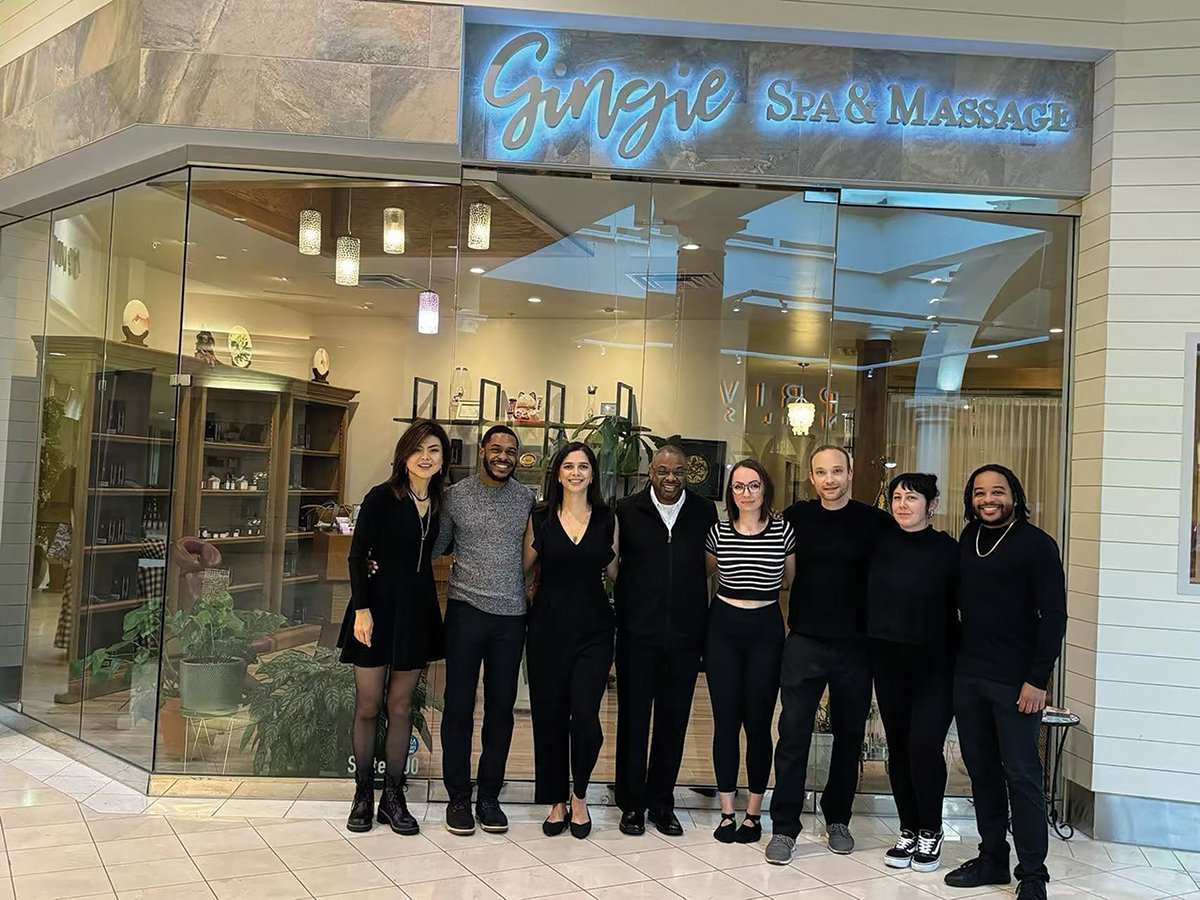
Zhenni Jackson has built an entrepreneurial
career spanning luxury bçeauty, wellness,
business leadership and enterprise artificial
intelligence.
Current Work & Vision
What excites you most about the work you’re doing at opAIda right now? Why opAIda? And why NOW?
What excites me most about opAIda is actually the people I have the privilege to work with.
We have brought together a group of highly individualistic, deeply committed, and extraordinarily talented people. They think independently, they challenge each other, but they share a belief in what we are building. To me, that combination—individuality with faith in a common mission—is incredibly powerful.
Our co-founder and Chief Humanity Officer, Dr. Tianhao Wu, has more than 20 years of AI experience. Earlier in his career, he helped architect Ask.com, which was built around the idea that people could ask questions in natural language and receive answers—an early precursor to the conversational way we interact with AI today. His experience also includes large-scale enterprise and government AI projects involving organizations such as the IRS, Bank of New York Mellon, Lockheed Martin, and the National Institute of Justice.
Our co-founder and Chief AI Officer, Dr. YZ, brings more than two decades of experience building sophisticated IT and engineering solutions, particularly for financial institutions. He understands not only AI technology but also what it takes to make complex systems work reliably inside demanding enterprise environments.
Our co-founder and CTO, Xuyang Weng, leads the translation of our technology vision into scalable products and customer deployments. What I particularly appreciate about Xuyang is his ability to connect deep engineering with practical execution—turning a customer’s complicated business problem into something our technology can actually solve.
And then we have a younger generation of exceptional talent. Shreyash Singh, our Forward Deployed Engineer, works directly at the intersection of our technology and our customers’ real-world problems. Jacob Hughes, our AI Engineer, contributes to building and advancing our AI capabilities. Andrew Zhong, our Project Manager, helps connect people, priorities, customers, and execution so that ideas actually become deliverables.
What I love is the combination of generations and experiences. We have people with decades of AI and enterprise experience working side by side with a new generation of engineers who move incredibly quickly and are not constrained by conventional thinking.
Why opAIda?
Because our strength is not simply building another general-purpose AI model. Our strength is vertical AI deployment—taking AI deep into specific industries and specific enterprise workflows where accuracy, domain knowledge, security, and measurable outcomes matter.
For example, in life sciences, we are applying AI to document-intensive workflows such as report writing, QA/QC, and RFI/RFP responses. In manufacturing, we have deployed AI into complex quotation workflows involving emails, PDFs, engineering drawings, spreadsheets, pricing rules, and decades of historical data.
That is where I believe the next chapter of AI will be created: not just AI that can talk, but AI that can work.
And that brings me to why now.
I believe 2026 is an inflection year for the industrialization of AI. The first wave of generative AI showed the world what was possible. Enterprises experimented, built pilots, and asked questions. Now the conversation is changing.
CEOs are no longer satisfied with asking, “What can AI do?”
They are asking, “Where can I put it into production? How does it integrate with my workflow? Can I trust the results? And what is the measurable return?”
That transition—from experimentation to production, from general intelligence to vertical applications, and from impressive demos to measurable business outcomes—is exactly where opAIda is positioned.
And personally, that is what makes this moment so exciting for me. I am surrounded by extraordinary people, working on one of the most transformative technologies of our generation, at the exact moment when AI is moving from possibility into real-world productivity.
I cannot imagine a more exciting place to be.
How do you see AI transforming the way businesses operate, and what role do you want to play in that future?
I believe AI will eventually become as fundamental to business as the internet or cloud computing. But I think its impact will go much further than business efficiency.
Today, so much human intelligence is consumed by work that doesn’t necessarily require the best of our humanity. Highly educated and talented people spend enormous amounts of time searching through documents, moving information between systems, checking repetitive details, preparing reports, answering routine questions, scheduling, reconciling data, and managing administrative processes.
AI agents will increasingly be able to take on much of that work. They will understand information, coordinate workflows, make recommendations, perform routine tasks, and collaborate with people.
But I don’t see the ultimate purpose of AI as replacing human beings. I see it as releasing human beings to do more of what makes us human.
I sometimes say this half-jokingly: I would love to travel, play, learn, spend time with people I love, and experience this beautiful world—while AI worries about paying the bills.
But behind the joke is something I believe very seriously.
For centuries, technological progress has been about reducing the amount of human labor required for survival. AI may allow us to take another extraordinary step. What if we could spend less of our lives on repetitive work and more of our lives creating, discovering, caring for one another, building relationships, experiencing nature, making art, and solving problems that truly require human wisdom?
Even when we think about the enormous challenges facing humanity—disease, climate, poverty, or conflicts between nations—AI can help us analyze information, understand complexity, discover possibilities, and make better-informed decisions. But human beings must remain responsible for the values, judgment, compassion, and choices behind those decisions.
That distinction is very important to me.
I don’t want to build a future where machines become more human and humans become more like machines. I want to help build a future where machines take on more of the mechanical work so human beings have greater freedom to be human. That is the role I want opAIda—and myself—to play in the future of AI.
What kind of impact or legacy do you hope to create through your work? And where do you. see opAIda in the next 3-5 years?
When I think about legacy, I don’t think first about what I want people to remember about me. I think about what becomes possible for other people because I was here.
Throughout my career, the form of my work has changed dramatically, but the underlying motivation has remained surprisingly consistent. When I worked in luxury beauty, I wanted the person in front of me to feel seen, valued, and more confident. When I became a therapist, I could use my own hands to relieve someone’s pain and make that person feel better. When I became an entrepreneur, I realized that by building a business and a team, I could extend that impact beyond what I could accomplish individually.
And now, with AI, I see an opportunity to multiply impact at an entirely different scale. That is one reason opAIda is so meaningful to me. I believe technology should ultimately elevate human capability. The purpose of AI should not simply be to make machines more intelligent. It should help human beings become more capable—freeing people from repetitive, labor-intensive work so they have more time for judgment, creativity, relationships, discovery, and the things that are uniquely human.
In the next three to five years, I want opAIda to become a recognized leader in enterprise and vertical AI, particularly in industries where knowledge is deep, workflows are complex, and accuracy really matters. In life sciences, for example, we want AI to help professionals with complex report writing, quality review, regulatory and document-intensive workflows. If we can reduce the enormous amount of time highly trained scientists spend searching, checking, reconciling, and rewriting information, they can devote more of their intelligence to science itself. And ultimately, that can contribute in some small way to getting better medicines to people faster.
But my vision for opAIda is not only about technology. I want to build an organization where extraordinary people can become even more extraordinary. I want talented people with very different personalities, generations, disciplines, and backgrounds to come together, challenge one another, learn from one another, and accomplish something none of us could accomplish individually. If people eventually look back at their years with opAIda and say, “That was where I discovered what I was truly capable of,” I would consider that an important part of our success.
And I want opAIda to demonstrate something about entrepreneurship itself: you don’t necessarily have to be the largest company to solve the largest problems. A relatively small group of exceptional people, united by purpose and willing to move boldly, can create disproportionate impact. Personally, I also hope my journey encourages people—particularly women and people who are considering reinventing themselves later in their careers.
I did not begin my career as an AI engineer. My journey went through economics and finance, luxury beauty, wellness, entrepreneurship, enterprise technology, and eventually AI. At different points, someone could have looked at my résumé and asked, “How do these pieces fit together?”
Today, I understand that every step counted.
So perhaps the legacy I hope to leave is not a monument to what I achieved. I would rather leave a ripple effect—people I helped, opportunities I created, talent I encouraged, organizations we transformed, and possibilities that continued multiplying long after my own contribution.
And if opAIda can become a company that multiplies human intelligence and capability while I can help multiply confidence and possibility in the people around me, that would be a legacy worth building.
Inspiration & Advice
For women who want to build something meaningful but feel uncertain where to start, what advice would you give them?
Start with a problem you care about. Talk to people. Find people who know things you don’t know. Take one meaningful action, then another.
Start before you feel completely ready. Many talented women wait because they believe they need more experience, more knowledge, more resources, or the perfect plan. But entrepreneurship rarely begins with certainty. You gain confidence by doing.
And don’t underestimate the value of your existing experience. Sometimes the experience that seems unrelated to your next chapter is exactly what gives you an advantage.
You don’t have to see the entire staircase. You just need the courage to take the next step.
Traveling between Silicon Valley, New York and New Jersey is quite intense. Everything seems different, the vibe, the industry focus, the time zones, etc. How do you strike a balance between the two cities? Has it been a challenge for you to fly back and forth?
If I could describe the three places in colors, I would say: Silicon Valley is orange. New York is black. Princeton is green.
Silicon Valley is orange—bright, energetic, optimistic, and always looking toward the horizon. There is an extraordinary sense of possibility there. People naturally talk about technology, innovation, scale, and what the world could look like five or ten years from now. When I am there, I feel that energy. It makes me want to think bigger, move faster, and imagine what hasn’t been built yet.
New York is black—sophisticated, powerful, elegant, and intense. It has a very different energy: finance, enterprise, capital, culture, global business, and deeply established institutions and relationships. People are direct. Time matters. Results matter. New York sharpens me.
And Princeton is green. Green represents nature, growth, balance, and renewal. Princeton gives me room to think and breathe. It allows me to reconnect with myself and see the bigger picture. To me, green doesn’t mean slowing down or standing still. It means growing from a grounded place.
There is actually one ritual that connects all three places for me: I run.
When I am in Silicon Valley, I love running through the Stanford campus, especially around Memorial Church. Sometimes I stop for a moment just to watch the California sunlight fall across the façade of the church. There is something about that light that captures how I feel about Silicon Valley—bright, warm, and full of possibility.
When I am in New York, I run along the Hudson River. The skyline, the movement of the city, the people running beside you, the river flowing next to Manhattan—it has a completely different rhythm. You feel the ambition and intensity of New York even while you are running.
And when I come home to Princeton, I run along the D&R Canal. Sometimes I encounter a heron standing quietly by the water. After airplanes, meetings, technology, investors, customers, and the intensity of two coasts, suddenly there is just the canal, the trees, the water, the heron—and me. That is my green.
The travel can certainly be exhausting. There are mornings when I wake up and have to remember which coast I’m on! But I actually enjoy the contrast because each place gives me something different.
For opAIda, those different ecosystems are also strategically important. Silicon Valley connects us with technology, talent, innovation, strategic partners, and investors. New York connects us with finance, enterprise, global business, and capital markets. Princeton places us in an extraordinary corridor of universities, pharmaceutical and life-sciences companies, and East Coast innovation.
So I don’t really think of my life as being divided among three places. I think of myself as connecting three different energies.
Orange gives me possibility. Black gives me intensity and sophistication. Green gives me grounding and growth.
And perhaps running has taught me something about balance as well. Balance doesn’t mean standing still. You can be moving very fast and still be centered.
For me, balance means knowing what each place gives me, being fully present while I am there, and carrying the best of each place with me wherever I go.
Is there a particular belief or principle that has guided you throughout your career?
One principle has stayed with me throughout my life:
In English, I would express it as: No step in life is wasted. Every step counts.
My career has not followed a straight line. I have moved across industries, businesses, cities, and very different professional environments. At certain moments, those chapters might have seemed disconnected.
Looking back, they are deeply connected.
Sales taught me how to understand people. Entrepreneurship taught me resilience. Running businesses taught me execution. Working across cultures taught me adaptability. Technology taught me to constantly learn. And AI has brought all of those experiences together.
So when something doesn’t work exactly as planned, I rarely see it as wasted time. I ask: What is this teaching me, and how can I use it for the next chapter?
Do you have a role model? Who is he/she and why?
I actually have many role models.
I admire philanthropists such as MacKenzie Scott and Melinda French Gates, because they demonstrate how success and resources can be transformed into opportunities for other people. I also admire Ida Liu for her leadership in global banking. I haven’t had the opportunity to meet these women personally yet, but I hope one day I will. I believe there is something very different about meeting someone you admire in person—you can feel their presence and, sometimes, their uplifting energy.
But one person I admire whom I have had the opportunity to meet personally is Saeed Amidi, founder and CEO of Plug and Play.
His entrepreneurial story is extraordinary. His family’s famous 165 University Avenue building in Palo Alto housed early companies including Google and PayPal, and Saeed’s investment activities included an early investment in PayPal. Those early experiences eventually contributed to the creation of the global innovation ecosystem that Plug and Play has become today.
But that is actually not the main reason I admire him.
What impressed me most was how someone who has achieved so much still takes a personal sincere interest in entrepreneurs who are just beginning their journeys.
My own interaction with Saeed started very simply. I sent him a LinkedIn invitation in August 2025, and he accepted it. Later, I wrote to introduce opAIda and our work in life sciences. He connected us with people in his organization.
We didn’t immediately succeed.
Later, as opAIda developed new AI capabilities for manufacturing, I reached out to him again. Again, he connected us with members of his team. We still didn’t immediately create the breakthrough we hoped for.
But I kept going.
Eventually I had the opportunity to introduce myself to Saeed in person after one of his speeches. He graciously agreed to meet with my team at Plug and Play’s Sunnyvale headquarters.
That meeting made a very strong impression on me.
He was extremely sharp. He quickly saw that we were trying to pursue too many directions and encouraged us to focus more deeply on life sciences. But he delivered that message with graciousness. And rather than simply giving us advice and moving on, he asked members of his team to help connect us with resources.
I noticed something much smaller, too.
When we were riding the elevator together, he held the door and let us walk out first.
It sounds like such a small gesture, but I remembered it.
Here was someone who had become extraordinarily successful and influential, yet he still paid attention to how he treated the people standing beside him.
That taught me something about leadership.
The higher you rise, the less you need to demonstrate how important you are. Your behavior can make other people feel important.
That is one reason I admire Saeed. His success has not only created wealth for himself; he has built an ecosystem designed to help entrepreneurs, corporations, investors, universities, and governments connect with one another. Plug and Play describes its mission as connecting people, and its ecosystem now includes more than 100,000 startups.
And perhaps there is also a little entrepreneur’s superstition in my admiration.
We recently decided to establish an opAIda presence at Plug and Play in Sunnyvale. I sometimes joke that if companies like PayPal and Google once grew under the Amidi family’s roof, perhaps sharing a roof with Saeed will bring opAIda a little Silicon Valley luck as well.
But I also know that luck alone never builds a company.
I have to show up. I have to keep knocking on the door. I have to listen when someone tells me a difficult truth. And when the door finally opens, I have to be ready to deliver.