




















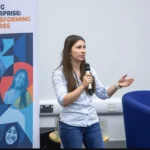



Photo: Kerry-Lyn Stanton-Downes, founder of Be Relational, challenges leaders to prioritise human connection as the foundation of performance and organisational success. Photos by MillionWays Studio
Rethinking Leadership Through Relational Intelligence And Human Connection
Kerry-Lyn Stanton-Downes reveals how relational capacity, not strategy, determines success, urging leaders to prioritise trust, connection, and human dynamics in an AI-transformed workplace.
T here are interviews that inform, and then there are those that quietly reframe the way one sees leadership, business, and human potential. This conversation with Kerry-Lyn Stanton-Downes belongs firmly in the latter category. Her work does not merely challenge conventional thinking—it dismantles long-held assumptions about what truly drives success in organisations and rebuilds them on far more human, and ultimately more sustainable, foundations.
Stanton-Downes stands as a rare figure in today’s business landscape: a thinker who bridges the worlds of psychotherapy, neuroscience, and leadership with both intellectual rigour and lived experience. Her journey—from early personal upheaval to becoming a pioneer in relational capacity—lends her insights a depth that cannot be manufactured. It is precisely this combination of personal truth and professional excellence that makes her voice so compelling, and her work so urgently relevant.
At a time when many organisations remain preoccupied with strategy, systems, and scale, Stanton-Downes redirects our attention to what lies beneath: the quality of human connection. Her concept of “relational wealth” is not simply a novel idea; it is a powerful lens through which to understand why some businesses thrive while others quietly fracture from within. In recognising that most organisational challenges are, at their core, relational rather than operational, she offers leaders not just a new framework, but a necessary one.
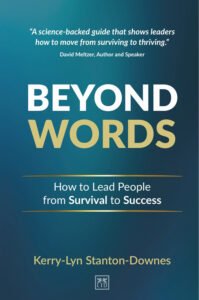
Her forthcoming book, Beyond Words: How to Lead People from Survival to Success, promises to be a defining contribution to modern leadership thinking. It arrives at a pivotal moment, as artificial intelligence reshapes the mechanics of work while simultaneously exposing the limitations of low relational capacity. Stanton-Downes does not position technology as the adversary, but rather as a catalyst—one that will reward those organisations capable of remaining deeply, intelligently human.
What distinguishes her work is its practicality. The “8 Principles of Relational Capacity” are not abstract ideals; they are actionable disciplines that leaders can integrate into the fabric of daily interactions. In doing so, she equips businesses with something far more valuable than efficiency: the ability to think, adapt, and grow together under pressure.
Entrepreneur Prime is proud to feature this conversation, not simply because of Stanton-Downes’ impressive body of work, but because of what it represents. Her perspective signals a shift in how we must begin to think about leadership in an increasingly complex world—one where success will depend less on what we build, and more on how we relate.
This is not just an interview. It is an invitation to reconsider the very infrastructure of modern business.
Kerry-Lyn Stanton-Downes is a visionary redefining leadership, elevating human connection as the true engine of sustainable success in modern organisations.
Key Highlights From The Interview
- Introduces the concept of relational wealth as a business-critical asset
- Explains why leaders often fail by applying operational solutions to relational problems
- Presents the 8 Principles of Relational Capacity as a practical leadership framework
- Identifies “relational poverty” as a hidden cause of team dysfunction
- Argues that AI will expose—not fix—human relational limitations
- Emphasises that psychological safety is an outcome, not a policy
- Demonstrates how small interactions build or erode trust over time
- Positions relational capacity as the ultimate competitive advantage in the future
What inspired you to write Beyond Words: How to Lead People from Survival to Success?
I kept watching capable, committed leaders struggle – not because they lacked skill or strategy, but because they were operating from survival mode and did not realise it.
They would come to me after a relationship imploded. After their best people left. After a team that should have been thriving was barely functioning. And they’d say some version of: ‘I thought if I just worked harder, got clearer on strategy, hired better people – it would all work out.’
The problem: they were trying to solve relational problems with operational solutions.
This showed me most leaders, entrepreneurs and teams have no language or framework for understanding how human nervous systems function under pressure.
The book exists because the future of work is about whether we can build the relational infrastructure to be human together under pressure.
“The problem: they were trying to solve relational problems with operational solutions.”
– Stanton-Downes
Can you explain the concept of “relational wealth” and why it’s crucial for leaders today?
Relational wealth is the accumulated trust, safety and connection that exists between people. It is what allows teams to stay present, curious and open – especially when things get hard.
Think of it like financial capital. You cannot spend what you have not built. The same is true relationally. When relational wealth is high, people can navigate difference without relational ruptures. They can offer respectful candour. They can lean into uncertainty together. They can repair when things go wrong.
When relational wealth is low – what I call relational poverty – everything becomes harder. People avoid difficult conversations. Trust thins. And over time, even high-performing teams start to fracture.
How do the 8 Principles of Relational Capacity work in practice?
The eight principles: Presence, Reflection, Curiosity, Respectful Candour, Vulnerability, Navigating Difference, Being in Service of a Shared Goal, and Mindset of Abundance work together.
Each one strengthens the others. Let me give you an example: At the beginning of a meeting, ask your team: “What is the one thing you need from this meeting today?”
These two simple questions invite:
- Presence: Bringing attention to this moment, right here, right now
- Reflection: Pausing to think about what you actually need.
- Curiosity: Seldom do we take the time to really understand each other’s needs.
- Difference: These questions surface difference, giving us an opportunity to name and work with the difference before it becomes destructive.
- In Service: These questions remind everyone they have come together for a shared purpose and gives them the opportunity to reconnect with it.
- Vulnerability: You’d be surprised how often asking these questions reveals a potential vulnerability in the product, service or system.
- Respectful Candour: The direct question encourages a level of candour we seldom engage in, instead holding our cards close to our chest and failing to be honest about what we need.
- Mindset of Abundance: When we are upfront about what is needed and what we are in service of and we begin to offer space for reflection, we are more likely to hold a mindset of abundance because we really know what is going on in the space. We are not positioning, withholding or defending.
You end up moving faster, more effectively, and without misunderstanding when using the 8 principles.
“Every single interaction is a deposit or a withdrawal from the relational account.”
– Stanton-Downes
What are some common signs a workplace is struggling with “relational poverty”?
The first thing to understand about relational poverty is that often things look fine on the surface. Meetings happen. Work gets done. But underneath, connection has quietly eroded.
But if you look closer you will begin to notice:
People become careful. They edit what they say. Conversations feel strangely polite yet emotionally thin.
Real curiosity disappears. When people stop asking deeper and more challenging questions, it usually means they’ve decided it is not safe to not know or challenge.
Small issues accumulate. That feedback you did not give. The tension nobody names. The conversation you avoid. None of this disappears – it sits in the relational space, polluting it. Over time, small ruptures become major fractures.
This is relational drift. It is gradual and not dramatic. By the time performance drops or trust visibly breaks down, relational poverty has been building for months – sometimes years.
You mention that every interaction builds or erodes relational wealth – can you elaborate on this idea?
Every single interaction between people is a deposit or a withdrawal from the relational account.
Think about it: You walk into a meeting. Someone acknowledges you – that’s a deposit. Someone fails to acknowledge you because they’re experiencing resentment or frustration – that’s a withdrawal. Small, yes. But relationally they accumulate.
Once the account is overdrawn, everything becomes harder.
How can leaders start auditing their organisation’s relational capital?
You cannot survey your way to understanding relational capital – but you can observe what is actually happening between people. Here is what I look for:
Do people speak honestly in service of the shared goal, or do they edit themselves?
Do tensions get named and worked through, or do they accumulate?
Do people stay curious when they disagree, or do they become defensive or withdrawn?
Do people repair when things go wrong, or do they avoid and move on?
Does it take a long time to make a sound decision?
Do the same conflicts resurface repeatedly?
Does it take a long time for information to move?
Notice the patterns. Then ask yourself: Are we investing in building relational wealth, or are we just managing the symptoms of relational poverty?
“Relational wealth is the accumulated trust, safety and connection that exists between people.”
– Stanton-Downes
How does relational intelligence differ from emotional intelligence, and why is it more important for leadership?
Emotional intelligence focuses on the individual – understanding and managing your own emotions, and recognising emotions in others. It is valuable. But it is still fundamentally about “me” and “you” as separate entities.
Relational intelligence is about what happens between us. It is not just recognising that you are frustrated or that I am defensive – it is understanding what is happening in the relational space that is creating the distance between us.
Leaders need both. Relational intelligence is where culture, trust and performance are actually created – in the space between people.
What role does psychological safety play in building relational wealth?
Psychological safety is the outcome of relational wealth – not the starting point.
Most organisations try to create psychological safety through policy, training, or telling people “it is safe to speak up here.” But you cannot mandate psychological safety. You cannot workshop your way to it. It is not something you declare – it is something people experience. And what they experience, is the quality of the relational space.
“The future of leadership is not about being the smartest person in the room.”
– Stanton-Downes
When relational wealth is high – when people have consistently experienced repair after rupture, when curiosity is present, when difference does not feel dangerous, when leaders stay regulated under pressure – psychological safety emerges naturally.
Could you share a real-world case study from your book when relational repair transformed a struggling team?
Jill was a brilliant director: innovative, precise, ambitious. But she would talk over people in meetings, railroad colleagues. She had been given clear feedback multiple times, but nothing changed. Her colleagues were frustrated. Talented people were threatening to leave.
Jill’s behaviour came from a place of fear of not being heard. The less she felt heard, the more she felt she had to speak.
This was not a Jill problem. It was a relational problem. Everyone was treating it as an individual issue and gave Jill feedback, expecting her to change. But when we focus on changing the individual, we miss what is happening in the relational space.
Once we understand it is relational, you stop trying to fix people and start tending to the space between them. That is where real transformation happens.
By following my practical framework – the Eight Principles of Relational Capacity –leaders can transform situations like this. Because once you understand it is relational, you stop trying to fix people and start tending to the space between them. That is where real transformation happens.
How do you see artificial intelligence impacting workplace dynamics and human connection in the long term?
AI is revealing what was already broken. Our systems were already strained. Relational capacity was already low.
Think about it: If your team only really talks when co-ordinating tasks or solving problems, and AI starts handling some of those tasks – what’s left? Do you have actual relationships, or do you just have transactional interdependence?
Long term, I believe AI will force us to become more human, not less. When AI handles the transactional work – the data analysis, the routine decisions, the predictable tasks – what remains is the deeply human work: sense-making in ambiguity, holding tension without collapsing it, navigating difference, making judgement calls when there is no clear answer.
The organisations that will thrive are not the ones with the best AI – they are the ones where people can still think together, stay curious under pressure, repair when things go wrong, and genuinely relate to each other.
What role can relational intelligence pay in helping organisations adapt to the rise of AI?
I use the term relational capacity rather than relational intelligence because intelligence suggests something cognitive – something you know. Relational capacity is what allows organisations to navigate the uncertainty AI brings – without fracturing and breaking.
When AI enters a workplace, it does not just change tasks. It changes how people experience their value, their roles, their place in the organisation. That uncertainty activates survival responses. People become fearful and start protecting themselves and without relational capacity trust thins.
Relational capacity means leaders can notice when all of these things are happening and intervene early. Relational capacity gives leaders the capacity to co-regulate under pressure. To repair when things get tense. To stay curious when people disagree about how to use AI. To keep people connected to a shared goal even when roles are shifting.
Relational capacity is the infrastructure that determines whether AI strengthens your organisation or destabilises it.
As AI continues to handle more transactional tasks, how can leaders reshape their roles to focus on fostering connection?
When AI handles the transactional work, what is left is the work that requires presence, curiosity, and the ability to hold complexity. That is not something you can delegate to a system. It requires human connection. So leaders need to reshape their roles around three core practices:
Notice what is happening in the relational space. Not just what is being said, but how people are relating.
Intervene early when connection erodes. Do not wait for a crisis.
Model repair, not perfection. Leaders do not need to get it right all the time. They need to repair when they get it wrong. That is what builds trust.
The future of leadership is not about being the smartest person in the room. It is about being the person who tends to the relational space so everyone else can do their best thinking.
Do you foresee a potential risk of over-reliance on AI in leadership decision-making?
Absolutely. It is already happening.
The risk is not that AI makes bad decisions. The risk is that leaders start outsourcing their judgement, and with it, their humanity.
Leadership is not just about making the right call. It is about making calls that people can understand, get behind, and execute together. That requires reading the relational space.
AI cannot do that. And if leaders become over-reliant on AI for decision-making, they will lose the very capacity that makes them effective – their ability to stay present, curious and attuned to what is happening between people.
The other risk is that often AI recommendations feel objective. They are not. They are based on historical data, existing patterns, embedded biases. If leaders stop questioning their own judgement, lived experience, and relational awareness – they are not leading anymore. They are administering.
How can leaders effectively balance technological advancement with the need for human-centred leadership?
By remembering that technology is a tool in service of people – not the other way round.
The balance is not about limiting technology. It is about being intentional with how you use it. Ask yourself: Is this technology helping us relate better, or is it creating distance?
Use technology to remove friction, not connection.
Create tech-free spaces. Not as a rejection of technology, but as a commitment to presence.
Model what it means to stay human. Do not hide behind technology when conversations get hard. Show your team that being present, curious, and relational is not optional – it is essential.
Technology advances. But people still need to feel seen, heard, and valued.
What do you think the workplace of the future looks like with AI as a permanent part of the equation?
I wish I had a crystal ball to answer this question. I do not. But what I do have is what psychology, neuroscience, philosophy, social sciences and anthropology tell us about human beings and how we function. As humans, we are incredibly resilient, but we adapt slowly. So when I look through those lenses, I believe the workplace of the future will be defined by one question: Can you be human together under pressure?
I think we will see:
Smaller, more relational teams. As AI handles transactional work, teams will get smaller and more specialised. Which means the quality of how those teams relate becomes even more critical.
Leadership as a relational discipline. The leaders who succeed will not be the ones who understand AI best. They will be the ones who can keep people regulated, connected, and thinking clearly while everything around them changes.
Relational capacity as competitive advantage. When everyone has access to the same AI tools, what differentiates an organisation? Relational capacity.
More human work, not less. AI will not make work less human. It will make the human parts more visible and more essential.
The workplace of the future is not human versus AI. It is human using AI to do the transactional work so they can focus on what actually matters: what is happening between people.
Can AI ever help build relational wealth, or is this a uniquely human ability?
I believe this is a uniquely human ability. And hope it stays that way.
AI can create the conditions where humans can connect more easily. Can it build relational wealth itself? I do not think so – no. that requires the one thing AI does not have: a nervous system that can attune to yours or mine.
Relational wealth is built in moments of genuine presence, vulnerability, repair, and co-regulation. Those are deeply human capacities. And they are, I believe, irreplaceable.
How does the integration of AI in the workplace affect psychological safety within teams?
It depends entirely on how leaders navigate it.
AI integration can strengthen psychological safety – or destroy it. The technology itself is not the determining factor. What matters is how leaders handle the uncertainty, change, and difference it creates.
Do leaders have the relational capacity to navigate its integration in a way that keeps teams connected, curious and human?
Kerry-Lyn Stanton-Downes is a TEDx speaker, author of Beyond Words: How to Lead People from Survival to Success (May 2026) and a relationship psychotherapist.
A Note from the Editor
A groundbreaking, insightful guide that redefines leadership, elevating human connection as the essential driver of performance, trust, and sustainable organisational success.
Beyond Words: How to Lead People from Survival to Success by Kerry-Lyn Stanton-Downes is a timely and thought-provoking exploration of what truly drives performance in modern organisations. Challenging the dominance of individualism, Stanton-Downes presents a compelling case for relational capacity as the foundation of leadership and wellbeing. Blending psychotherapy with practical insight, the book moves beyond theory to offer a transformative lens on connection, culture, and success. It is essential reading for leaders seeking to build resilient, high-performing teams in an increasingly complex and AI-influenced world.